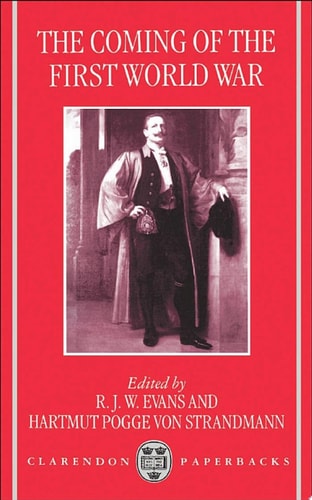
The Coming of the First World War
0
0
As an Amazon Associate and affiliate partner, Menrva Books earns from qualifying purchases. Learn more
Author Description
This book makes two distinctive contributions to one of the most fundamental debates in modern European history. First, it presents readable and judicious accounts of the events and decisions directly precipitating the outbreak of war in each of the main belligerent countries; second, it assesses the role of public opinion and popular mood in determining and responding to the `July Crisis' of 1914. With a list of contributors who are all distinguished in different aspects of the subject, this stimulating survey covers the historiography of the immediate causes of the war, and includes new reflections on the character of the official and unofficial `mentalités' during the last weeks of peace. Contributors: Sir Michael Howard, Zbynek Zeman, R. J. W. Evans, D. W. Spring, Hartmut Pogge von Strandmann, Richard Cobb, and Michael Brock.
Menrva's Summary
THE THESIS
This work investigates the complex interplay of diplomatic decision-making and public sentiment that led to the outbreak of the First World War in 1914. The authors, a collective of distinguished historians including R. J. W. Evans and Hartmut Pogge von Strandmann, utilize a multi-national framework to analyze the specific political pressures within each belligerent nation. By examining both official state records and the broader cultural 'mentalités' of the era, the text provides a comprehensive assessment of the immediate causes of the conflict.
THE SCOPE MAP
What You Will Find
- Comparative analysis of decision-making processes in major European powers during the July Crisis.
- Examination of the influence of public opinion and popular mood on government policy.
- Historiographical survey of the immediate causes of the war.
- Reflections on the official and unofficial cultural attitudes of 1914.
Scope Limits
- The text focuses primarily on the immediate weeks preceding the war rather than long-term geopolitical structural causes.
- It does not provide a comprehensive military history of the subsequent conflict.
THE AUTHORITY PERSPECTIVE
Experts recognize this collection as a significant contribution to the historiography of the July Crisis due to its focus on the intersection of elite diplomacy and public sentiment. Readers frequently note the academic rigor of the contributors and the clarity with which they navigate the complex political landscape of pre-war Europe.
Page Count:
190
Publication Date:
1988-01-01
Publisher:
Clarendon Press
ISBN-10:
0191500593
ISBN-13:
9780191500596
History
European History
Political History
Military History
Historiography
World War
Community Tags
Other Editions(3)
Similar Books