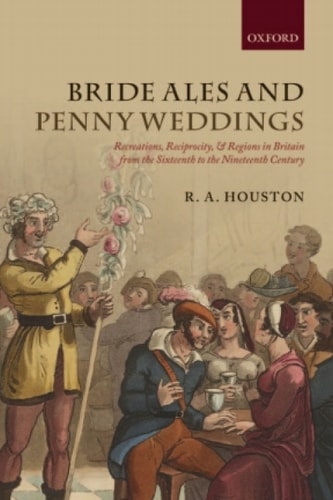
Bride Ales and Penny Weddings: Recreations, Reciprocity, and Regions in Britain from the Sixteenth to the Nineteenth Centuries
0
0
As an Amazon Associate and affiliate partner, Menrva Books earns from qualifying purchases. Learn more
Author Description
Some of the poorest regions of historic Britain had some of its most vibrant festivities. Between the sixteenth and nineteenth centuries, the peoples of northern England, Lowland Scotland, and Wales used extensive celebrations at events such as marriage, along with reciprocal exchange of gifts, to emote a sense of belonging to their locality. Bride Ales and Penny Weddings looks at regionally distinctive practices of giving and receiving wedding gifts, in order to understand social networks and community attitudes. Examining a wide variety of sources over four centuries, the volume examines contributory weddings, where guests paid for their own entertainment and gave money to the couple, to suggest a new view of the societies of 'middle Britain', and re-interpret social and cultural change across Britain. These regions were not old fashioned, as is commonly assumed, but differently fashioned, possessing social priorities that set them apart both from the south of England and from 'the Celtic fringe'. This volume is about informal communities of people whose aim was maintaining and enhancing social cohesion through sociability and reciprocity. Communities relied on negotiation, compromise, and agreement, to create and re-create consensus around more-or-less shared values, expressed in traditions of hospitality and generosity. Ranging across issues of trust and neighbourliness, recreation and leisure, eating and drinking, order and authority, personal lives and public attitudes, R. A. Houston explores many areas of interest not only to social historians, but also literary scholars of the British Isles.
Menrva's Summary
THE THESIS
This work investigates how contributory wedding customs in northern England, Lowland Scotland, and Wales functioned as mechanisms for social cohesion and community identity between the sixteenth and nineteenth centuries. R. A. Houston, a historian specializing in early modern British social history, utilizes a broad array of archival sources to challenge the perception that these regions were merely stagnant or traditional. He argues that these communities operated under distinct social priorities, utilizing reciprocity and gift exchange to navigate economic and cultural shifts while maintaining local consensus.
THE SCOPE MAP
What You Will Find
- Analysis of 'bride ales' and 'penny weddings' as economic and social instruments.
- Examination of gift-giving practices and their role in establishing trust and neighbourliness.
- Historical data spanning four centuries across northern England, Lowland Scotland, and Wales.
Scope Limits
- The study does not focus on the southern regions of England or the broader 'Celtic fringe' beyond the specified areas.
- The text does not provide a comprehensive history of marriage laws, focusing instead on the social and cultural aspects of wedding celebrations.
THE AUTHORITY PERSPECTIVE
Historians and scholars of British social history recognize this volume as a significant contribution to the understanding of regional social structures and informal community networks. Readers frequently note the academic density of the prose and the meticulous use of primary source material to support the author's regional framework.
Page Count:
272
Publication Date:
2014-01-01
Publisher:
OUP Oxford
ISBN-10:
0191502413
ISBN-13:
9780191502415
History
Sociology
British History
Social History
Anthropology
Marriage customs and rites
European History
Great Britain
Community Tags
Other Editions(2)

Similar Books