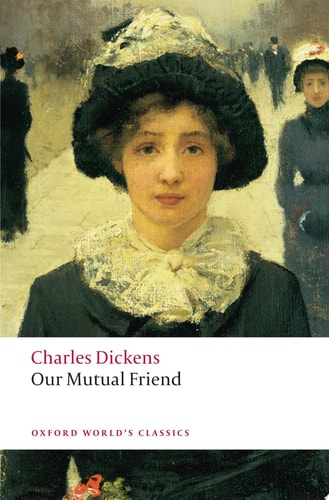
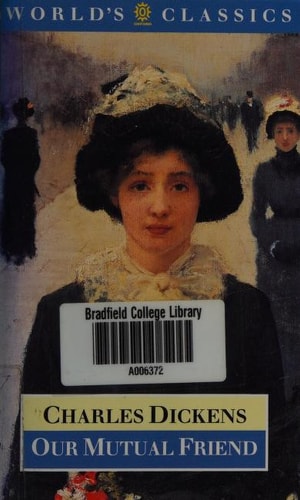
Our Mutual Friend
0
0
As an Amazon Associate and affiliate partner, Menrva Books earns from qualifying purchases. Learn more
Author Description
Our Mutual Friend is a satiric masterpiece about money. The last novel Dickens completed, and perhaps his most angry, it sounds all the great themes of his later work: the innocence and venality of the aspiring poor, the hollow pretensions of the nouveau riche, the unfailing power of wealth to corrupt everyone it touches. Among those caught up in the ruthless forces of change in Dickens's London are the archetypal innocent Noddy Boffin, who 'inherits' a dustheap where the trash of the rich is thrown; Silas Wegg, a grotesque, one-legged man with unlimited fantasies of grandeur and power; Mr. Veneering, Member of Parliament, whose house, furnishings, servants, carriage, and baby are all 'bran-new'; and Alfred and Sophronia Lammle, who marry one another because each wrongly believes the other is rich. The social themes of Our Mutual Friend--having to do with the treatment of the poor, education, representative government, even the inheritance laws--are informed and brought into coherence by the underlying presence of the Thames, signifying the perpetual flow of life into death, and acting as agent of retribution and regeneration too, as a kind of river god in fact, in a novel in which no other god is very present.
Menrva's Summary
THE PULSE
The discovery of a body in the Thames triggers a complex inheritance dispute that exposes the moral decay of Victorian London society. The narrative follows the fortunes of various characters connected to the Harmon estate, specifically the humble Noddy Boffin and the opportunistic Silas Wegg. These individuals navigate a rigid class structure where wealth dictates social standing and personal value. Dickens employs a multi-perspective narrative framework to examine the intersection of greed, identity, and social mobility within the industrial landscape of the nineteenth century.
INSIDE THE PAGES
- Extensive use of social satire targeting the nouveau riche
- Symbolic representation of the Thames as a force of retribution
- Complex, interconnected subplots involving inheritance and deception
- Detailed character studies of the marginalized and the aspiring poor
- Exploration of the corrupting influence of capital
- Critique of Victorian government and educational institutions
- Use of grotesque character archetypes to highlight moral failings
- Non-linear thematic development centered on the cycle of life and death
THE COLLECTIVE ECHO
Discussion often centers on the novel's biting critique of Victorian materialism and the pervasive influence of money on human relationships. Readers frequently highlight the intricate plotting and the stark contrast between the genuine innocence of characters like Boffin and the calculated greed of the social climbers. Critics often point to the Thames as a central, unifying motif that provides both atmosphere and a sense of inevitable moral judgment. The work is recognized for its dense prose and its uncompromising look at the social stratification of the era, which continues to generate debate regarding Dickens's final completed vision of society.
Page Count:
880
Publication Date:
1989-01-01
Publisher:
Oup Oxford
ISBN-10:
0191505900
ISBN-13:
9780191505904
Romance
Crime
Fiction
Satire
Fiction
Classic Literature
Victorian
Realism
Literary
Social Commentary
Community Tags
Other Editions(4)
Similar Books