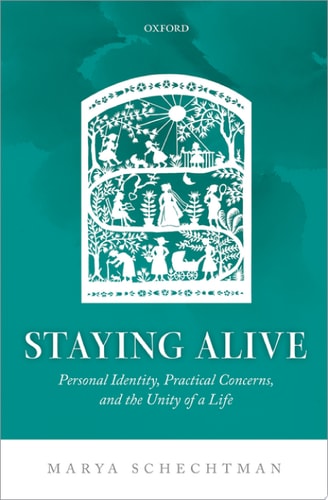
Staying Alive: Personal Identity, Practical Concerns, and the Unity of a Life
0
0
As an Amazon Associate and affiliate partner, Menrva Books earns from qualifying purchases. Learn more
Author Description
Judgments of personal identity stand at the heart of our daily transactions. Family life, friendships, institutions of justice, and systems of compensation all rely on our ability to reidentify people. It is not as obvious as it might at first appear just how to express this relation between facts about personal identity and practical interests in a philosophical account of personal identity. A natural thought is that whatever relation is proposed as the one which constitutes the sameness of a person must be important to us in just the way identity is. This simple understanding of the connection between personal identity and practical concerns has serious difficulties, however. One is that the relations that underlie our practical judgments do not seem suited to providing a metaphysical account of the basic, literal continuation of an entity. Another is that the practical interests we associate with identity are many and varied and it seems impossible that a single relation could simultaneously capture what is necessary and sufficient for all of them. Staying Alive offers a new way of thinking about the relation between personal identity and practical interests which allows us to overcome these difficulties and to offer a view in which the most basic and literal facts about personal identity are inherently connected to practical concerns. This account, the 'Person Life View', sees persons as unified loci of practical interaction, and defines the identity of a person in terms of the unity of a characteristic kind of life made up of dynamic interactions among biological, psychological, and social attributes and functions mediated through social and cultural infrastructure.
Menrva's Summary
THE THESIS
How can a philosophical account of personal identity reconcile the metaphysical requirements of entity continuity with the diverse practical concerns that define human life? Marya Schechtman, a philosopher specializing in personal identity and ethics, argues that traditional accounts fail because they attempt to force a single relation to satisfy both metaphysical and practical demands. She proposes the 'Person Life View,' which defines identity through the unified, dynamic interaction of biological, psychological, and social functions within a cultural infrastructure.
THE SCOPE MAP
What You Will Find
- The 'Person Life View' framework for understanding human identity.
- Analysis of the intersection between metaphysical continuity and practical social interaction.
- Integration of biological, psychological, and social attributes into a singular identity model.
Scope Limits
- Does not provide a comprehensive history of all identity theories.
- Does not focus on neuroscientific or purely biological definitions of the self.
THE AUTHORITY PERSPECTIVE
Philosophers and academics frequently cite this work as a significant contribution to the debate surrounding the narrative and practical dimensions of the self. Experts highlight the text as a rigorous, sophisticated challenge to traditional reductionist theories of personal identity.
Page Count:
224
Publication Date:
2014-01-01
Publisher:
OUP Oxford
ISBN-10:
0191507784
ISBN-13:
9780191507786
Philosophy
Identity Philosophical concept
Social Philosophy
Personal Identity
Ethics
Metaphysics
Community Tags
Similar Books