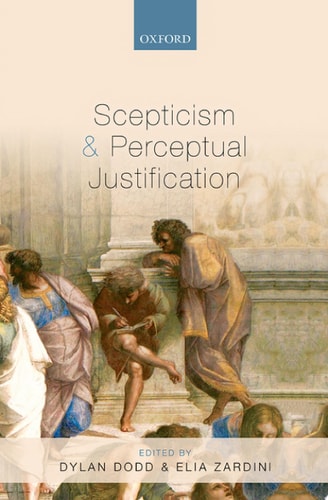
Scepticism and Perceptual Justification
0
0
As an Amazon Associate and affiliate partner, Menrva Books earns from qualifying purchases. Learn more
Author Description
One of the hardest problems in the history of Western philosophy has been to explain whether and how experience can provide knowledge (or even justification for belief) about the objective world outside the experiencer's mind. A prominent brand of scepticism has precisely denied that experience can provide such knowledge. How, for instance (these sceptics ask) can I know that my experiences are not produced in me by a powerful demon (or, in a modern twist on that traditional Cartesian scenario, by a supercomputer)? This volume, originating from the research project on Basic Knowledge recently concluded at the Northern Institute of Philosophy, presents new essays on scepticism about the senses written by some of the most prominent contemporary epistemologists. They approach the sceptical challenge by discussing such topics as the conditions for perceptual justification, the existence of a non-evidential kind of warrant and the extent of one's evidence, the epistemology of inference, the relations between justification, probability and certainty, the relevance of subjective appearances to the epistemology of perception, the role that broadly pragmatic considerations play in epistemic justification, the contents of perception, and the function of attention. In all these cases, the papers show how philosophical progress on foundational issues can improve our understanding of and possibly afford a solution to a historically prominent problem like scepticism.
Menrva's Summary
THE THESIS
This volume investigates whether and how sensory experience can provide justification for beliefs about the objective world in the face of skeptical challenges. The editors, Dylan Dodd and Elia Zardini, compile a collection of essays from contemporary epistemologists who examine the foundational relationship between perception and knowledge. By analyzing the conditions of perceptual warrant and the nature of evidence, the contributors aim to advance the philosophical discourse surrounding Cartesian-style skeptical scenarios.
THE SCOPE MAP
What You Will Find
- Analysis of the conditions for perceptual justification and non-evidential warrants.
- Discussions on the epistemology of inference and the role of subjective appearances.
- Examinations of the impact of pragmatic considerations and attention on epistemic justification.
Scope Limits
- The text focuses primarily on contemporary analytic epistemology and does not provide a comprehensive historical survey of all skeptical traditions.
THE AUTHORITY PERSPECTIVE
Experts recognize this collection as a significant contribution to the Basic Knowledge research project, offering rigorous engagement with current debates in epistemology. Readers frequently note the academic density of the prose, making it most suitable for advanced students and professional philosophers.
Page Count:
384
Publication Date:
2014-01-01
Publisher:
OUP Oxford
ISBN-10:
0191502499
ISBN-13:
9780191502491
Philosophy
Perception
Epistemology
Academic
History & Surveys
Mind & Body
Skepticism
Community Tags
Other Editions(2)
Similar Books