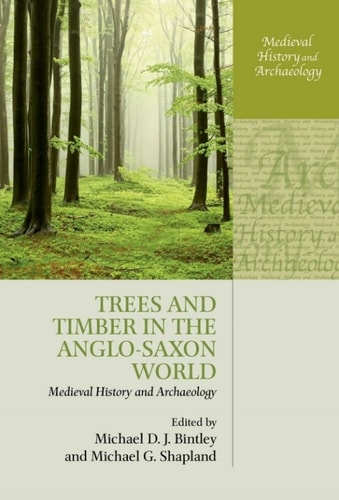
Trees and Timber in the Anglo-Saxon World
0
0
As an Amazon Associate and affiliate partner, Menrva Books earns from qualifying purchases. Learn more
Author Description
Trees were of fundamental importance in Anglo-Saxon society. Anglo-Saxons dwelt in timber houses, relied on woodland as an economic resource, and created a material culture of wood which was at least as meaningfully-imbued, and vastly more prevalent, than the sculpture and metalwork with which we associate them today. Trees held a central place in Anglo-Saxon belief systems, which carried into the Christian period, not least in the figure of the cross itself. Despite this, the transience of trees and timber in comparison to metal and stone has meant that the subject has received comparatively little attention from scholars. Trees and Timber in the Anglo-Saxon World constitutes the very first collection of essays written about the role of trees in early medieval England, bringing together established specialists and new voices to present an interdisciplinary insight into the complex relationship between the early English and their woodlands. The woodlands of England were not only deeply rooted in every aspect of Anglo-Saxon material culture, as a source of heat and light, food and drink, wood and timber for the construction of tools, weapons, and materials, but also in their spiritual life, symbolic vocabulary, and sense of connection to their beliefs and heritage. These essays do not merely focus on practicalities, such as carpentry techniques and the extent of woodland coverage, but rather explore the place of trees and timber in the intellectual lives of the early medieval inhabitants of England, using evidence from archaeology, place-names, landscapes, and written sources.
Menrva's Summary
THE THESIS
This collection of essays investigates the fundamental role of trees and timber in the material, economic, and spiritual life of Anglo-Saxon society. Editors Michael D. J. Bintley and Michael G. Shapland assemble a group of specialists to address the scholarly neglect of wood as a primary cultural medium in early medieval England. By synthesizing archaeological data with textual and landscape evidence, the authors argue that timber was as central to Anglo-Saxon identity as the more durable materials of stone and metal.
THE SCOPE MAP
What You Will Find
- Analysis of carpentry techniques and woodland management practices
- Examination of the symbolic and religious significance of trees in both pagan and Christian contexts
- Integration of place-name evidence and landscape archaeology
- Studies on the economic utility of forests for fuel, construction, and food production
Scope Limits
- The text focuses specifically on early medieval England and does not provide a comprehensive survey of continental Germanic woodland practices.
THE AUTHORITY PERSPECTIVE
Scholars identify this work as a foundational interdisciplinary resource for understanding the environmental history of the Anglo-Saxon period. Readers frequently note the academic density of the prose, which effectively bridges the gap between material archaeology and intellectual history.
Page Count:
272
Publication Date:
2013-01-01
Publisher:
OUP Oxford
ISBN-10:
0191502170
ISBN-13:
9780191502170
History
European History
Timber
Nature
Cultural History
Middle Ages
Renaissance
History of the Americas
Archaeology
Environmental History
Great Britain