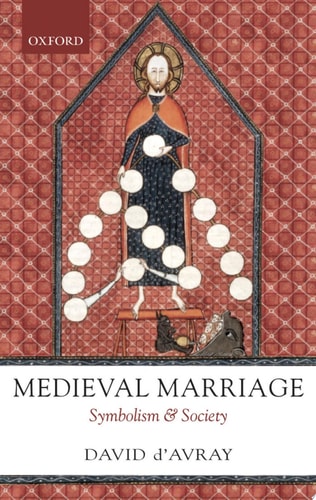
Medieval Marriage: Symbolism and Society
0
0
As an Amazon Associate and affiliate partner, Menrva Books earns from qualifying purchases. Learn more
Author Description
This study shows how marriage symbolism emerged from the world of texts to become a social force affecting ordinary people. It covers the whole medieval period but identifies the decades around 1200 as decisive. New arguments for regarding preaching as a mass medium from the thirteenth century are presented, building on the author's Medieval Marriage Sermons. In marriage preaching symbolism was central. Marriage symbolism also became a social force through law, and lay behind the combination of monogamy and indissolubility which made the medieval Church's marriage system a unique development in world history. Symbolism is not presented as an explanation on its own: it interacted with other causal factors, notably the eleventh-century Gregorian Reform's drive for celibacy, which made the higher clergy like a third gender and less sympathetic to patriarchal polygamous tendencies. Sexual intercourse as a symbol of Christ's union with the Church became central, not just in mysticism but in society as structured by Church law. Symbolism also explains apparently bizarre rules, such as the exemption from capital punishment of clerics in minor orders provided that they married a virgin not a widow. The rules about blessing second marriages are also connected with this nexus of thought. The book is based on a wide range of manuscript sources: sermons, canon law commentaries, Apostolic Penitentiary registers, papal bulls, a gaol delivery roll, and pastoral handbooks. The collection of documents at the end of the book expands the source base for the history of medieval marriage generally as well as underpinning the thesis about symbolism.
Menrva's Summary
THE THESIS
This study investigates how marriage symbolism transitioned from theological texts into a potent social force that shaped the lives of ordinary people throughout the medieval period. David L. d'Avray, a specialist in medieval history, utilizes a vast array of primary sources—including sermons, canon law commentaries, and pastoral handbooks—to argue that the period around 1200 was a decisive turning point. He posits that the Church's unique marriage system, characterized by monogamy and indissolubility, was deeply influenced by symbolic interpretations of sexual union as a reflection of Christ's relationship with the Church.
THE SCOPE MAP
What You Will Find
- Analysis of the thirteenth-century preaching tradition as a mass medium.
- Examination of the Gregorian Reform's impact on clerical celibacy and social structures.
- Investigation into the intersection of canon law and symbolic theology.
- A collection of primary source documents including papal bulls and gaol delivery rolls.
Scope Limits
- The text does not provide a comprehensive social history of marriage outside the influence of Church doctrine and law.
- It does not focus on secular or non-Christian marriage customs of the era.
THE AUTHORITY PERSPECTIVE
Scholars recognize this work as a significant contribution to the understanding of medieval ecclesiastical influence on social norms. Readers frequently note the academic density of the prose and the rigorous reliance on manuscript evidence to support the author's claims.
Page Count:
336
Publication Date:
2005-01-01
Publisher:
OUP Oxford
ISBN-10:
0191518751
ISBN-13:
9780191518751
Religion
History
Marriage customs and rites
Cultural History
European History
Canon law
Sociology
Religious Aspects
Community Tags
Similar Books














