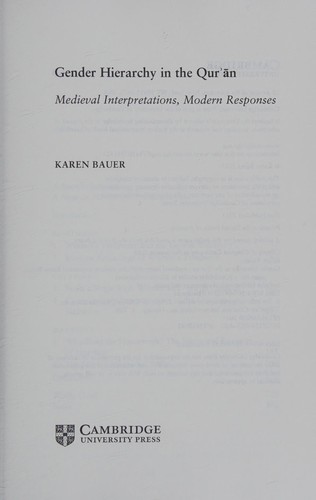
Gender Hierarchy in the Qur'an
0
0
As an Amazon Associate and affiliate partner, Menrva Books earns from qualifying purchases. Learn more
Author Description
This book explores how medieval and modern Muslim religious scholars ('ulamā') interpret gender roles in Qur'ā;nic verses on legal testimony, marriage, and human creation. Citing these verses, medieval scholars developed increasingly complex laws and interpretations upholding a male-dominated gender hierarchy; aspects of their interpretations influence religious norms and state laws in Muslim-majority countries today, yet other aspects have been discarded entirely. Karen Bauer traces the evolution of their interpretations, showing how they have been adopted, adapted, rejected, or replaced over time, by comparing the Qur'ān with a wide range of Qur'ānic commentaries and interviews with prominent religious scholars from Iran and Syria. At times, tradition is modified in unexpected ways: learned women argue against gender equality, or Grand Ayatollahs reject sayings of the Prophet, citing science instead. This innovative and engaging study highlights the effects of social and intellectual contexts on the formation of tradition, and on modern responses to it
Menrva's Summary
THE THESIS
This book investigates the historical development and contemporary relevance of gender hierarchy as interpreted through the Qur'an by Muslim religious scholars. It examines how medieval and modern 'ulamā' have interpreted Qur'anic verses concerning legal testimony, marriage, and human creation to establish and maintain a male-dominated social order. The study analyzes the evolution of these interpretations by comparing the Qur'an with various commentaries and through interviews with scholars in Iran and Syria, revealing how social and intellectual contexts shape tradition and its modern reception.
THE SCOPE MAP
- Analysis of Qur'anic verses related to legal testimony and gender.
- Exploration of interpretations concerning marriage and gender roles.
- Examination of Qur'anic narratives on human creation and gender.
- Comparison of medieval and modern interpretations by 'ulamā'.
- Case studies of scholars from Iran and Syria.
- Discussion of how interpretations influence contemporary religious norms and state laws.
- Highlighting instances where tradition is modified or rejected based on new contexts or evidence.
THE AUTHORITY PERSPECTIVE
This study is recognized for its innovative approach to understanding the formation of tradition and its modern responses concerning gender in Islamic scholarship. By comparing the Qur'an with a wide range of commentaries and engaging with prominent religious scholars, the book offers a nuanced perspective on how interpretations of gender hierarchy have evolved. It effectively demonstrates the impact of social and intellectual contexts on these evolving norms, showcasing instances where tradition is adapted or even challenged. The work provides valuable insights into the dynamic nature of religious interpretation and its influence on contemporary societies.
Page Count:
308
Publication Date:
2015-01-01
ISBN-10:
110704152X
ISBN-13:
9781107041523
History
Non-Fiction
Religion
Sociology
Community Tags
Similar Books