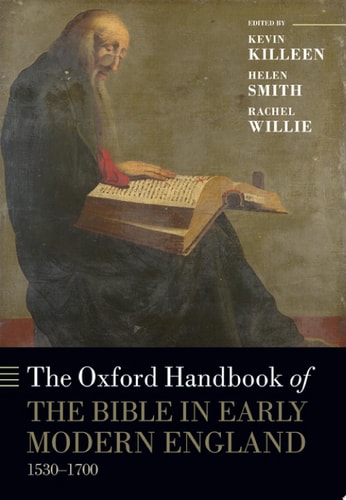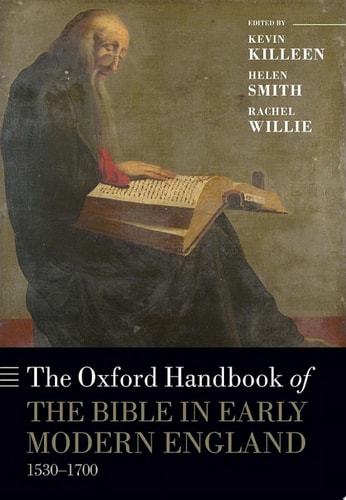
The Oxford Handbook of the Bible in Early Modern England, 1530-1700
0
0
As an Amazon Associate and affiliate partner, Menrva Books earns from qualifying purchases. Learn more
Author Description
The Bible was, by any measure, the most important book in early modern England. It preoccupied the scholarship of the era, and suffused the idioms of literature and speech. Political ideas rode on its interpretation and deployed its terms. It was intricately related to the project of natural philosophy. And it was central to daily life at all levels of society from parliamentarian to preacher, from the 'boy that driveth the plough', famously invoked by Tyndale, to women across the social scale. It circulated in texts ranging from elaborate folios to cheap catechisms; it was mediated in numerous forms, as pictures, songs, and embroideries, and as proverbs, commonplaces, and quotations. Bringing together leading scholars from a range of fields, The Oxford Handbook of the Bible in Early Modern England, 1530-1700 explores how the scriptures served as a generative motor for ideas, and a resource for creative and political thought, as well as for domestic and devotional life. Sections tackle the knotty issues of translation, the rich range of early modern biblical scholarship, Bible dissemination and circulation, the changing political uses of the Bible, literary appropriations and responses, and the reception of the text across a range of contexts and media. Where existing scholarship focuses, typically, on Tyndale and the King James Bible of 1611, The Oxford Handbook of the Bible in England, 1530-1700 goes further, tracing the vibrant and shifting landscape of biblical culture in the two centuries following the Reformation.
Menrva's Summary
THE THESIS
This volume investigates the pervasive influence of the Bible on the intellectual, political, and social fabric of early modern England between 1530 and 1700. Edited by Helen Miller Smith, Kevin Killeen, and Rachel Judith Willie, the work compiles essays from leading scholars to examine how biblical texts functioned as a primary engine for cultural and creative development. The contributors argue that the Bible was not merely a religious document but a foundational resource that shaped the idioms, political discourse, and domestic practices of the era.
THE SCOPE MAP
What You Will Find
- Analysis of biblical translation and scholarship practices
- Examination of Bible dissemination through various media, including folios, catechisms, and visual arts
- Exploration of the Bible's role in political rhetoric and natural philosophy
- Case studies on the reception of scripture across different social strata
Scope Limits
- Does not focus exclusively on the King James Bible of 1611
- Does not limit its scope to theological or ecclesiastical history
THE AUTHORITY PERSPECTIVE
Experts recognize this handbook as a comprehensive reference that expands the study of biblical culture beyond traditional theological boundaries. Readers frequently note the academic density of the prose and its value as a foundational text for scholars of the Reformation and early modern literature.
Page Count:
783
Publication Date:
2015-01-01
Publisher:
OUP Oxford
ISBN-10:
0191510599
ISBN-13:
9780191510595
Religion
History
Religion and sociology
Great Britain
Bibles
Literary Criticism
Early Modern
English
Bible versions
English & College Success
Cultural History