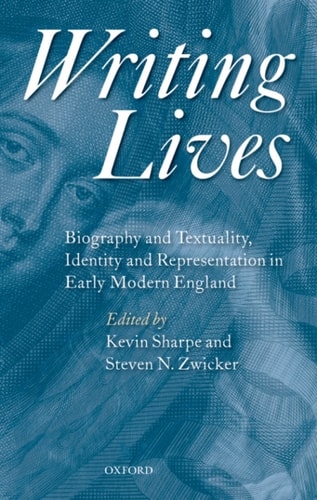
Writing Lives: Biography and Textuality, Identity and Representation in Early Modern England
0
0
As an Amazon Associate and affiliate partner, Menrva Books earns from qualifying purchases. Learn more
Author Description
Biography appears to thrive as never before; and there clearly remains a broad readership for literary biography. But the methods and approaches of recent criticism which have contributed rich insights and asked new questions about the ways in which we interrogate and appreciate literature have scarcely influenced biography. Biography as a form has been largely unaffected by either new critical or historical perspectives. For early-modern scholars the biographical model, fashioned as a stable form in the eighteenth century, has been, in some respects, a distorting lens onto early-modern lives. In the Renaissance and early-modern period rather the biography's organic and developmental narratives of a coherent subject, lives were written and represented in a bewildering array of textual sites and generic forms. And such lives were clearly imagined and written not to entertain or even simply to inform, but to edify and instruct, to counsel and polemicize. It is only when we understand how early moderns imagined and narrated lives, only that is through a full return to history and an exact historicizing, that we can newly conceive the meaning of those lives and begin to rewrite their histories free of the imperatives and teleologies of Enlightenment. In Writing Lives literary scholars, cultural critics, and historians of ideas and visual media, currently engaged both with early modern conceptions of the life and our own conceptualizing of the biographical project, reflect on the problems of writing lives from the various perspectives of their own research and in the form of case studies informed by new questions.
Menrva's Summary
THE THESIS
This collection investigates how the traditional biographical model, established in the eighteenth century, acts as a distorting lens when applied to the study of early modern lives. The authors, Kevin Sharpe and Steven N. Zwicker, assemble a group of literary scholars, cultural critics, and historians to challenge the assumption of the coherent, developmental subject. By advocating for an exact historicizing of textual sites and generic forms, the contributors argue that early modern lives were constructed for purposes of edification, counsel, and polemic rather than modern narrative entertainment.
THE SCOPE MAP
What You Will Find
- Analysis of early modern textual sites and generic forms of life-writing
- Critique of Enlightenment-era biographical teleologies
- Interdisciplinary case studies involving visual media and history of ideas
Scope Limits
- The text does not provide a comprehensive biography of any single individual
- The analysis is strictly confined to the early modern period and does not address contemporary biographical trends
THE AUTHORITY PERSPECTIVE
Scholars recognize this work as a significant intervention in the field of early modern studies, specifically for its critique of traditional biographical methodology. Experts frequently highlight the text as a necessary resource for those seeking to understand the intersection of historicism and life-writing.
Page Count:
384
Publication Date:
2008-01-01
Publisher:
Oxford University Press
ISBN-10:
0191550892
ISBN-13:
9780191550898
History
Biography
Biography Autobiography
Early Modern
Great Britain
Historiography
Renaissance
Literary Criticism
English
English & College Success
Cultural History
Community Tags
Similar Books