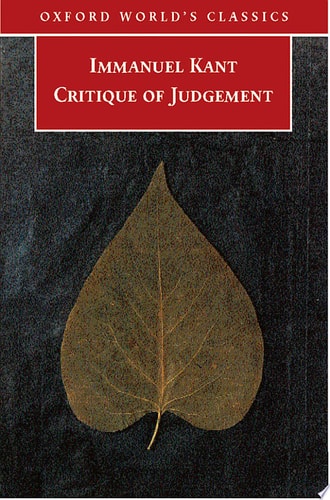
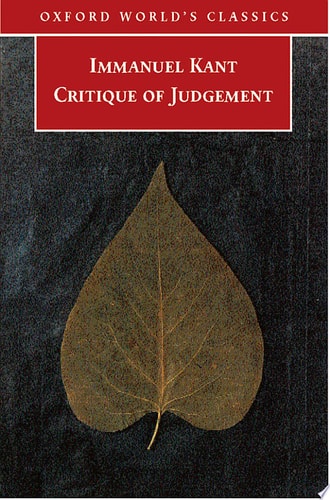
Critique of Judgement
0
0
As an Amazon Associate and affiliate partner, Menrva Books earns from qualifying purchases. Learn more
Author Description
'beauty Has Purport And Significance Only For Human Beings, For Beings At Once Animal And Rational' In The Critique Of Judgement (1790) Kant Offers A Penetrating Analysis Of Our Experience Of The Beautiful And The Sublime, Discussing The Objectivity Of Taste, Aesthetic Disinterestedness, The Relation Of Art And Nature, The Role Of Imagination, Genius And Originality, The Limits Of Representation And The Connection Between Morality And The Aesthetic. He Also Investigates The Validity Of Our Judgements Concerning The Apparent Purposiveness Of Nature With Respect To The Highest Interests Of Reason And Enlightenment. The Work Profoundly Influenced The Artists And Writers Of The Classical And Romantic Period And The Philosophy Of Hegel And Schelling. It Has Remained A Central Point Of Reference From Schopenhauer And Nietzsche Through To Phenomenology, Hermeneutics, The Frankfurt School, Analytical Aesthetics And Contemporary Critical Theory. J. C. Meredith's Classic Translation Has Been Revised In Accordance With Standard Modern Renderings And Provided With A Bilingual Glossary. This Edition Also Includes The Important 'first Introduction' That Kant Originally Composed For The Work. About The Series: For Over 100 Years Oxford World's Classics Has Made Available The Widest Range Of Literature From Around The Globe. Each Affordable Volume Reflects Oxford's Commitment To Scholarship, Providing The Most Accurate Text Plus A Wealth Of Other Valuable Features, Including Expert Introductions By Leading Authorities, Helpful Notes To Clarify The Text, Up-to-date Bibliographies For Further Study, And Much More.
Menrva's Summary
THE THESIS
How can human beings reconcile the subjective experience of beauty and the apparent purposiveness of nature with the objective requirements of rational morality? Immanuel Kant, a foundational figure in modern Western philosophy, investigates the bridge between the realm of nature and the realm of freedom. By analyzing the faculty of judgment, he argues that aesthetic and teleological experiences provide a necessary link between our sensory perceptions and our moral obligations.
THE SCOPE MAP
What You Will Find
- Analysis of aesthetic disinterestedness and the nature of the beautiful and the sublime.
- Examination of the role of genius, imagination, and originality in artistic creation.
- Investigation into the teleological judgment of nature and its relation to human reason.
- Inclusion of the original 'First Introduction' and a bilingual glossary.
Scope Limits
- The text does not provide a practical guide for creating art but focuses on the philosophical conditions of aesthetic judgment.
- It does not offer empirical scientific proofs but explores the transcendental framework of human cognition.
THE AUTHORITY PERSPECTIVE
Experts recognize this work as a foundational text in aesthetics that has shaped centuries of critical theory and continental philosophy. Readers frequently note the significant academic density of the prose, which requires careful study to fully grasp Kant's complex categorical framework.
Page Count:
448
Publication Date:
2007-01-01
Publisher:
Oup Oxford
ISBN-10:
0191517437
ISBN-13:
9780191517433
Philosophy
Epistemology
Classical Philosophy
Aesthetics
Community Tags
Other Editions(9)



Similar Books
Reader Comments
Share Your Thoughts
No comments yet. Be the first to share your thoughts!