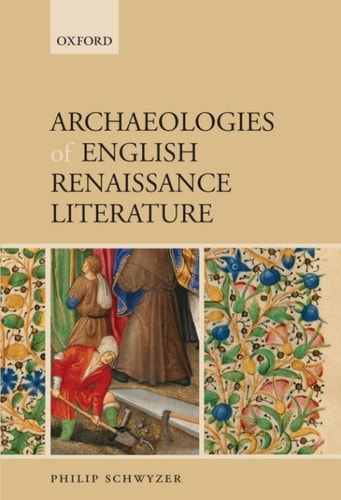
Archaeologies of English Renaissance Literature
0
0
As an Amazon Associate and affiliate partner, Menrva Books earns from qualifying purchases. Learn more
Author Description
This study draws on the theory and practice of archaeology to develop a new perspective on the literature of the Renaissance. Philip Schwyzer explores the fascination with images of excavation, exhumation, and ruin that runs through literary texts including Spenser's Faerie Queene, Shakespeare's Romeo and Juliet and Hamlet, Donne's sermons and lyrics, and Thomas Browne's Hydriotaphia, or Urne-Buriall. Miraculously preserved corpses, ruined monasteries, Egyptian mummies, and Yorick's skull all figure in this study of the early modern archaeological imagination. The pessimism of the period is summed up in the haunting motif of the beautiful corpse that, once touched, crumbles to dust. Archaeology and literary studies are themselves products of the Renaissance. Although the two disciplines have sometimes viewed one another as rivals, they share a unique and unsettling intimacy with the traces of past life - with the words the dead wrote, sang, or heard, with the objects they made, held, or lived within. Schwyzer argues that at the root of both forms of scholarship lies the forbidden desire to awaken (and speak with) the dead. However impossible or absurd this desire may be, it remains a fundamental source of both ethical responsibility and aesthetic pleasure.
Menrva's Summary
THE THESIS
This study investigates the intersection of early modern literary production and the nascent practice of archaeology, questioning how the period's obsession with material remains shaped its creative output. Philip Schwyzer, a scholar of early modern literature, utilizes a framework that bridges historical material culture and literary analysis. He argues that the Renaissance fascination with excavation and exhumation reflects a deeper, often forbidden, desire to communicate with the dead through the preservation of texts and artifacts.
THE SCOPE MAP
What You Will Find
- Analysis of literary texts including Spenser's Faerie Queene, Shakespeare's Hamlet and Romeo and Juliet, and Thomas Browne's Hydriotaphia.
- Examination of cultural motifs such as ruined monasteries, Egyptian mummies, and the 'beautiful corpse' trope.
- Theoretical exploration of the shared origins of archaeology and literary scholarship.
Scope Limits
- The study does not provide a comprehensive history of archaeological science, focusing instead on the 'archaeological imagination' within literature.
- It does not cover non-English Renaissance texts, maintaining a strict focus on the English tradition.
THE AUTHORITY PERSPECTIVE
Scholars frequently cite this work for its innovative methodology in connecting material culture with canonical literary texts. Experts highlight the text as a significant contribution to the study of early modern attitudes toward history and mortality.
Page Count:
256
Publication Date:
2007-01-01
Publisher:
Oxford University Press
ISBN-10:
0191525723
ISBN-13:
9780191525728
Literary Criticism
English
Cultural History
English & College Success
Archaeology
Early Modern