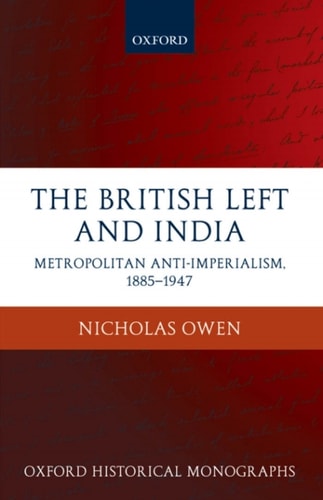
The British Left and India: Metropolitan Anti-Imperialism, 1885-1947
0
0
As an Amazon Associate and affiliate partner, Menrva Books earns from qualifying purchases. Learn more
Author Description
From the formation of the Indian National Congress in 1885 to the winning of independence in 1947, this book traces the complex and often troubled relationship between anti-imperialist campaigners in Britain and in India. Nicholas Owen traces the efforts of British Radicals and socialists to identify forms of anti-imperialism in India which fitted comfortably with their existing beliefs and their sense of how authentic progressive movements were supposed to work. On the other side of the relationship, he charts the trajectory of the Indian National Congress, as it shifted from appeals couched in language familiar to British progressives to the less familiar vocabulary and techniques of Mahatma Gandhi. The new Gandhian methods of self-reliance had unwelcome implications for the work that the British supporters of Congress had traditionally undertaken, leading to the collapse of their main organisation, and the precipitation of anti-imperialist work into the turbulent cross-currents of left-wing British politics. Metropolitan anti-imperialism became largely a function of other commitments, whether communist, theosophical, pacifist, socialist or anti-fascist. Revealing the strengths and weaknesses of these connections, The British Left and India looks at the ultimate failure to create the durable alliance between anti-imperialists which the British Empire's governors had always feared. Drawing on a wide range of newly available archival material in Britain and India, including the records of campaigning organizations, political parties, the British government and the imperial security services, this book is a powerful account of the diverse and fragmented world of British metropolitan anti-imperialism.
Menrva's Summary
THE THESIS
This work investigates the historical disconnect between British anti-imperialist movements and the Indian National Congress during the period of 1885 to 1947. Nicholas Owen, a historian specializing in colonial politics, utilizes extensive archival research from both British and Indian sources to analyze why a unified, durable alliance between these two groups failed to materialize. He argues that the ideological rigidity of British socialists, combined with the shift toward Gandhian methods, rendered traditional metropolitan support structures obsolete and fragmented.
THE SCOPE MAP
What You Will Find
- Analysis of the political relationship between the Indian National Congress and British radical organizations.
- Examination of the impact of Gandhian self-reliance on British political support.
- Use of primary source records from political parties, government archives, and imperial security services.
Scope Limits
- The study focuses primarily on the metropolitan British perspective rather than a comprehensive history of the Indian independence movement itself.
THE AUTHORITY PERSPECTIVE
Scholars recognize this monograph as a rigorous examination of the limitations of transnational political solidarity during the colonial era. Readers frequently note the academic density of the prose and the depth of the archival research provided by the author.
Page Count:
300
Publication Date:
2008-01-01
Publisher:
Oxford University Press
ISBN-10:
0191528412
ISBN-13:
9780191528415
History
European History
Socialism
British History
Indian History
Colonialism
Public opinion
Imperialism
Community Tags
Similar Books