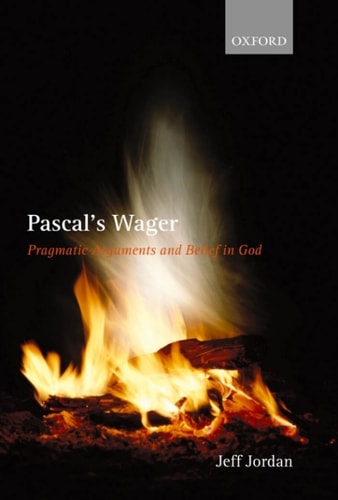
Pascal's Wager: Pragmatic Arguments and Belief in God
0
0
As an Amazon Associate and affiliate partner, Menrva Books earns from qualifying purchases. Learn more
Author Description
What if there is no strong evidence that God exists? Is belief in God when faced with a lack of evidence illegitimate and improper? Evidentialism answers yes. According to Evidentialism, it is impermissible to believe any proposition lacking adequate evidence. And if any thesis enjoys the status of a dogma among philosophers, it is Evidentialism. Presenting a direct challenge to Evidentialism are pragmatic arguments for theism, which are designed to support belief in the absence of adequate evidence. Pascal's Wager is the most prominent theistic pragmatic argument, and issues in epistemology, the ethics of belief, and decision theory, as well as philosophical theology, all intersect at the Wager. Other prominent theistic pragmatic arguments include William James's celebrated essay, 'The Will to Believe'; a posthumously published and largely ignored pragmatic argument authored by J.S. Mill, supporting the propriety of hoping that quasi-theism is true; the eighteenth-century Scottish essayist James Beattie's argument that the consoling benefit of theistic belief is so great that theistic belief is permissible even when one thinks that the existence of God is less likely than not; and an argument championed by the nineteenth-century French philosopher Jules Lachelier, which based its case for theistic belief on the empirical benefits of believing as a theist, even if theism was very probably false. In Pascal's Wager: Pragmatic Arguments and Belief in God, Jeff Jordan explores various theistic pragmatic arguments, and the objections employed against them. Jordan presents a new version of the Wager, what he calls the 'Jamesian Wager', and argues that the Jamesian Wager survives the objections hurled against theistic pragmatic arguments and provides strong support for theistic belief. In addition to arguing for a sound version of the Wager, Jordan also argues that there is a version of Evidentialism compatible with a principled use of pragmatic arguments, and that the Arg
Menrva's Summary
THE THESIS
This book investigates whether it is rationally permissible to maintain belief in God in the absence of sufficient empirical evidence. Jeff Jordan, a philosopher specializing in the philosophy of religion, examines the tension between Evidentialism—the view that belief requires adequate evidence—and pragmatic arguments for theism. He constructs a framework that evaluates the utility and logical consistency of betting on the existence of God, ultimately proposing a refined version of the argument known as the 'Jamesian Wager.'
THE SCOPE MAP
What You Will Find
- Historical analysis of pragmatic arguments from Pascal, William James, J.S. Mill, James Beattie, and Jules Lachelier
- Application of decision theory and ethics of belief to theistic propositions
- Development of the 'Jamesian Wager' as a defense against common philosophical objections
- Reconciliation of pragmatic belief with specific forms of Evidentialism
Scope Limits
- The text does not provide a comprehensive survey of all ontological or cosmological arguments for God's existence
- It does not focus on the sociological or psychological impacts of religious practice outside of the context of rational belief
THE AUTHORITY PERSPECTIVE
Scholars and students of philosophy frequently cite this work as a rigorous, technical contribution to the discourse on the ethics of belief. Experts highlight the book's utility in bridging the gap between classical decision theory and traditional philosophical theology.
Page Count:
240
Publication Date:
2006-01-01
Publisher:
Clarendon Press
ISBN-10:
0191537578
ISBN-13:
9780191537578
Philosophy
Philosophy of
Ethics of Belief
Evidence
Theology
Pragmatism
Epistemology
Community Tags
Other Editions(2)

Similar Books






Reader Comments
Share Your Thoughts
No comments yet. Be the first to share your thoughts!