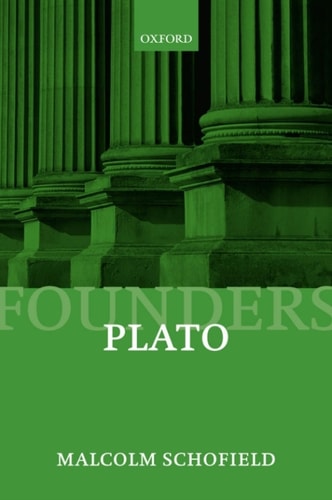
Plato: Political Philosophy
0
0
As an Amazon Associate and affiliate partner, Menrva Books earns from qualifying purchases. Learn more
Author Description
The Founders of Modern Political and Social Thought series presents critical examinations of the work of major political philosophers and social theorists, assessing both their initial contribution and their continuing relevance to politics and society. Each volume provides a clear, accessible, historically informed account of a thinker's work, focusing on a reassessment of the central ideas and arguments. The series encourages scholars and students to link their study of classic texts to current debates in political philosophy and social theory. In this authoritative general account of Plato's political thought, a leading scholar of ancient Greek philosophy explores its key themes: education, democracy and its shortcomings, the role of knowledge in government, utopia and the idea of community, money and its grip on the psyche, ideological uses of religion. Between them these define what Plato considered to be the fundamental challenges for politics. All remain live issues. On all of them Plato took radical and uncomfortable positions. The radicalism derives above all from his reflections on the fate of Socrates at the hands of the Athenian democracy in 399 BC. So the book begins with chapters situating Plato's alienation from contemporary politics in its historical context, and examines at length the images of Athens and the Spartan alternative which pervade his writings on politics. The Republic is a main focus of discussion throughout, but ideas and arguments in many other dialogues from Apology and Gorgias to the Statesman and the Laws are examined. Plato: Political Philosophy assumes a broad range of readers - with backgrounds in varied fields (politics, philosophy, classics, history) - who may have little prior knowledge of Plato. It articulates and analyses his main lines of thought, illustrating them with a liberal use of translated excerpts, and highlighting affinities with modern theorists from Machiavelli and Mill to Rawls and Habermas.
Menrva's Summary
THE THESIS
This volume investigates the core question of how Plato's political philosophy addresses fundamental challenges of governance, community, and the human psyche that remain relevant to contemporary society. Malcolm Schofield, a distinguished scholar of ancient Greek philosophy, utilizes historical context and textual analysis of key dialogues to argue that Plato's radical positions were largely shaped by the trial and death of Socrates. The book provides a structured framework for understanding Plato's critique of democracy and his alternative visions for the state.
THE SCOPE MAP
What You Will Find
- Analysis of major Platonic dialogues including The Republic, Apology, Gorgias, Statesman, and Laws.
- Examination of historical tensions between Athens and Sparta as reflected in Platonic thought.
- Comparative discussions linking Platonic ideas to modern theorists such as Machiavelli, Mill, Rawls, and Habermas.
Scope Limits
- The text does not provide an exhaustive biography of Plato, focusing instead on his political and social arguments.
- It does not cover the entirety of Plato's metaphysical or epistemological theories except where they directly inform his political philosophy.
THE AUTHORITY PERSPECTIVE
Scholars and students frequently cite this work as a highly accessible yet rigorous introduction to Plato's political thought for those with little prior background. Experts highlight the author's ability to bridge the gap between ancient historical context and modern political debates as a primary strength of the text.
Page Count:
400
Publication Date:
2006-01-01
Publisher:
Oxford University Press
ISBN-10:
0191530433
ISBN-13:
9780191530432
Philosophy
Classics
Ancient History
Political Philosophy
History & Surveys
Plato
Community Tags
Similar Books