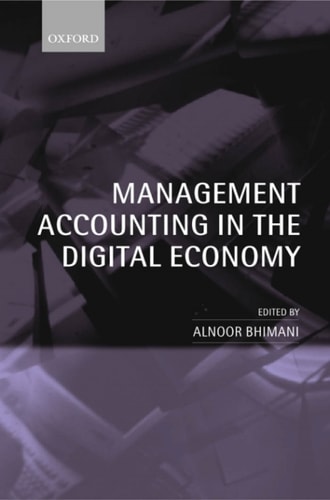
Management Accounting in the Digital Economy
0
0
As an Amazon Associate and affiliate partner, Menrva Books earns from qualifying purchases. Learn more
Author Description
There is mounting evidence that the deployment of digital technologies by enterprises affects not just their functioning in economic terms, but also mobilizes broader social, institutional, and organizational effects. At a technical level, digitization directly influences organizational processes. Notions of its potential also define managerial pursuits and the search for enhanced organizational performance. Inevitably, digitizatoin impacts the form, substance and provenance of internal accounting information with attendant consequences on the behaviour and actions of decision makers. Knowledge about the influence of digital technologies on management accounting thinking processes and practices is starting to emerge. A variety of issues relating to pricing strategies, cost management and control mechanisms are evident. But the implications for the field are far wider. Aspects of trust, organizational power, cultural shifts, strategization, convergence of product and information elements, and newly perceived contingencies between information dimensions and contextual factors are altering management accounting systems, structures, thinking, and practices. This book explores these and other issues along different planes of reference. The first part of the book consists of chapters that discuss accounting and management control systems and wider structural shifts connected with the advent of digital technologies. In the second section, the contributors analyse organizationally focused shifts occurring concomitantly alongside digital transformations in the economy. The final part of the book comprises chapters that consider avenues of accounting transformation that may be pursued in specific contexts both in terms of practice and as concepts that afford insights into possible management accounting futures. Broadly, the fourteen chapters of this book bring together practical commentaries, conceptual frameworks, and theoretical argumentation and explore wider narratives re
Menrva's Summary
THE THESIS
This book investigates how the integration of digital technologies fundamentally alters management accounting systems, organizational structures, and the decision-making processes of modern enterprises. Alnoor Bhimani, a recognized scholar in management accounting, curates a collection of contributions that examine the intersection of digital innovation and internal control mechanisms. The text argues that digitization is not merely a technical upgrade but a catalyst for broader institutional, cultural, and strategic shifts that redefine how firms measure performance and manage costs.
THE SCOPE MAP
What You Will Find
- Analysis of accounting and management control systems in the context of digital infrastructure.
- Examination of organizational power, trust, and cultural shifts resulting from digital adoption.
- Theoretical frameworks for understanding the convergence of product and information elements.
- Case-based commentaries on pricing strategies and cost management in digital economies.
Scope Limits
- The text does not provide a technical manual for specific accounting software implementation.
- It does not focus on consumer-facing digital marketing or external financial reporting standards.
THE AUTHORITY PERSPECTIVE
Experts identify this work as a significant contribution to the evolving discourse on how digital transformation impacts internal corporate governance. Readers frequently note the academic density of the prose, which serves as a foundational resource for researchers and practitioners analyzing the future of management accounting.
Page Count:
320
Publication Date:
2003-01-01
Publisher:
OUP Oxford
ISBN-10:
0191532002
ISBN-13:
9780191532009
Business
Management accounting
Technology management
Finance
Community Tags
Other Editions(2)

Similar Books









Reader Comments
Share Your Thoughts
No comments yet. Be the first to share your thoughts!