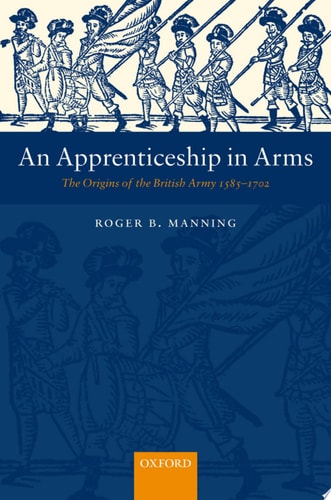
An Apprenticeship in Arms: The Origins of the British Army 1585-1702
0
0
As an Amazon Associate and affiliate partner, Menrva Books earns from qualifying purchases. Learn more
Author Description
Based upon a wide range of historical and literary sources, An Apprenticeship in Arms is a scholarly study of the military experiences of peers and gentlemen from the British Isles who volunteered to fight in the religious and dynastic wars of mainland Europe, as well as the ordinary men who were impressed to serve in the ranks from the time of the English intervention in the Dutch war of independence in 1585 to the death of the soldier-king William III in 1702. This apprenticeship in arms exposed these men to the technological innovations of the military revolution, laid the foundations for a fledgling professional officer class based upon merit and established a fund of military expertise. This remilitarization of aristocratic culture and society was completed by 1640, and provided numerous experienced military officers for the various armies of the civil wars and, subsequently, for the embryonic British army after William III invaded and conquered the British Isles and committed the Three Kingdoms to the armed struggle against Louis XIV during the Nine Years War. Conflicts between amateur aristocrats and so-called 'soldiers of fortune' led to continuing debates about the relative merits of standing armies and a select militia; the individual pursuit of honour and glory by such amateurs also obscured the more rational military and political objectives of the modern state, subverted military discipline, and delayed the process of the professionalization of the officer corps of the British army.
Menrva's Summary
THE THESIS
This work investigates how the military experiences of British volunteers and conscripts in European conflicts between 1585 and 1702 facilitated the professionalization and development of the British Army. Roger B. Manning, a historian specializing in early modern British military and social history, utilizes a broad array of primary literary and historical sources to construct his argument. He posits that the exposure of British soldiers to continental military innovations during this period was critical in transitioning from an aristocratic, honor-based military culture to a professionalized officer corps capable of serving the modern state.
THE SCOPE MAP
What You Will Find
- Analysis of the military revolution and its technological impact on British forces.
- Examination of the social shift in aristocratic culture toward remilitarization.
- Discussion of the tension between amateur aristocratic officers and professional soldiers of fortune.
- Historical overview of the period from the Dutch war of independence to the death of William III.
Scope Limits
- The text focuses primarily on the development of the officer class and military culture rather than detailed tactical accounts of every battle.
- It does not provide an exhaustive history of the British Army beyond the year 1702.
THE AUTHORITY PERSPECTIVE
Scholars and military historians recognize this text as a significant contribution to the understanding of the social and political origins of the British military establishment. Readers frequently note the academic density of the prose, which is well-suited for researchers and students of early modern European history.
Page Count:
496
Publication Date:
2006-01-01
Publisher:
OUP Oxford
ISBN-10:
0191532126
ISBN-13:
9780191532122
History
Military History
Warfare
British History
European History
Great Britain
History - Modern
Community Tags
Similar Books