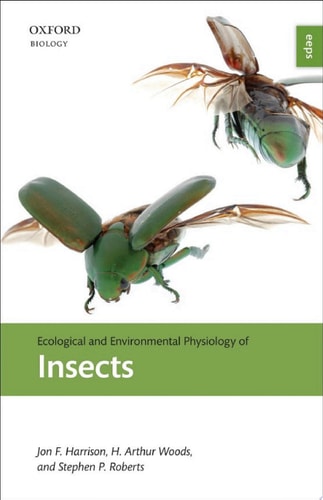
Ecological and Environmental Physiology of Insects
0
0
As an Amazon Associate and affiliate partner, Menrva Books earns from qualifying purchases. Learn more
Author Description
Insects are the most ecologically important multicellular heterotrophs in terrestrial systems. They play critical roles in ecological food webs, remain devastating agricultural and medical pests, and represent the most diverse group of eukaryotes in terms of species numbers. Their dominant role among terrestrial heterotrophs arises from a number of key physiological traits, and in particular by the developmental and evolutionary plasticity of these traits. Ecological and Environmental Physiology of Insects presents a current and comprehensive overview of how the key physiological traits of insects respond to environmental variation. It forges conceptual links from molecular biology through organismal function to population and community ecology. As with other books in the Series, the emphasis is on the unique physiological characteristics of the insects, but with applications to questions of broad relevance in physiological ecology. As an aid to new researchers on insects, it also includes introductory chapters on the basics and techniques of insect physiology ecology.
Menrva's Summary
THE THESIS
This text investigates how the physiological traits of insects facilitate their ecological dominance and how these traits respond to environmental variation. The authors, H. Arthur Woods, Jon F. Harrison, and Stephen P. Roberts, utilize a synthesis of molecular biology, organismal function, and ecological theory to explain the evolutionary plasticity of insects. The book provides a comprehensive framework for understanding how physiological mechanisms underpin the roles insects play in terrestrial food webs and their status as significant agricultural and medical pests.
THE SCOPE MAP
What You Will Find
- Analysis of developmental and evolutionary plasticity in insect physiology
- Conceptual links between molecular biology and population ecology
- Introductory chapters covering fundamental techniques in insect physiological ecology
- Examination of physiological responses to diverse environmental stressors
Scope Limits
- Does not provide an exhaustive taxonomy of all insect species
- Focuses primarily on physiological ecology rather than behavioral or social insect studies
THE AUTHORITY PERSPECTIVE
Experts recognize this work as a foundational resource for students and researchers interested in the intersection of insect physiology and environmental science. Readers frequently note the academic density of the prose, which effectively bridges the gap between basic physiological principles and complex ecological applications.
Page Count:
389
Publication Date:
2012-01-01
Publisher:
OUP Oxford
ISBN-10:
0191625353
ISBN-13:
9780191625350
Science
Physiology
Biology
Zoology
Entomology
Ecology
Community Tags
Other Editions(3)
Similar Books