The Dancer Defects
0
0
As an Amazon Associate and affiliate partner, Menrva Books earns from qualifying purchases. Learn more
Author Description
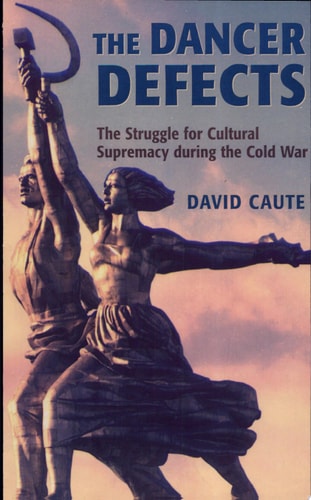
The Cultural Cold War Between The Soviet Union And The West Was Without Precedent. At The Outset Of This Original And Wide-ranging Historical Survey, David Caute Establishes The Nature Of The Extraordinary Cultural Competition Set Up Post-1945 Between Moscow, New York, London And Paris, With The Most Intimate Frontier War Staged In The City Of Berlin. Using Sources In Four Languages, The Author Of The Fellow-travellers And The Great Fear Explores The Cultural Cold War As It Rapidly Penetrated Theatre, Film, Classical Music, Popular Music, Ballet, Painting And Sculpture, As Well As Propaganda By Exhibition. Major Figures Central To Cold War Conflict In The Theatre Include Brecht, Miller, Sartre, Camus, Havel, Ionesco, Stoppard And Konstantin Simonov, Whose Inflammatory Play, The Russian Question, Occupies A Chapter Of Its Own Based On Original Archival Research. Leading Film Directors Involved Included Eisenstein, Romm, Chiarueli, Aleksandrov, Kazan, Tarkovsky And Wajda. In The Field Of Music, The Soviet Union In The Zhdanov Era Vigorously Condemned 'modernism', 'formalism', And The Avant-garde. A Chapter Is Devoted To The Intriguing Case Of Dmitri Shostakovich, And The Disputed Authenticity Of His 'autobiography' Testimony. Meanwhile In The West The Congress For Cultural Freedom Was Sponsoring The Modernist Composers Most Vehemently Condemned By Soviet Music Critics; Stravinsky, Schoenberg, Hindemith Among Them. Despite Constant Attempts At Repression, The Soviet Party Was Unable To Check The Appeal Of Jazz On The Voice Of America, Then Rock Music, To Young Russians. Visits To The West By The Bolshoi And Kirov Ballet Companines, The Pride Of The Ussr, Were Fraught With Threats Of Cancellation And The Danger Of Defection. Considering The Case Of Rudolf Nureyev, Caute Pours Cold Water On Overheated Speculations About Kgb Plots To Injure Him And Other Defecting Dancers. Turning To Painting, Where Socialist Realism Prevailed In Russia, And The Impressionist Heritage Was
Menrva's Summary
THE THESIS
This book investigates the multifaceted cultural competition between the Soviet Union and the West during the Cold War, examining how artistic expression became a primary theater for ideological conflict. David Caute, a historian known for his work on political and cultural history, utilizes archival research and primary sources in four languages to map the intersection of state propaganda and creative output. He argues that the cultural Cold War was not merely a peripheral struggle but a central component of the geopolitical rivalry that defined the post-1945 era.
THE SCOPE MAP
What You Will Find
- Analysis of cultural sectors including theater, film, classical and popular music, ballet, and visual arts.
- Case studies on prominent figures such as Brecht, Shostakovich, and Nureyev.
- Examination of institutional entities like the Congress for Cultural Freedom and the Soviet Party's censorship apparatus.
Scope Limits
- The text focuses primarily on the rivalry between Moscow and Western hubs like London, Paris, and New York, with less emphasis on non-European or non-American cultural theaters.
- It does not provide an exhaustive biography of every artist mentioned, focusing instead on their role within the Cold War ideological framework.
THE AUTHORITY PERSPECTIVE
Experts recognize this work as a comprehensive and meticulously researched survey of the cultural dimensions of the Cold War. Readers frequently note the academic density of the prose, which provides a rigorous examination of how artistic movements were weaponized by competing political systems.
Page Count:
828
Publication Date:
2003-01-01
Publisher:
Oup Oxford
ISBN-10:
0191554588
ISBN-13:
9780191554582
History
Cold War
Art History
Music History
Film History
Community Tags
Similar Books