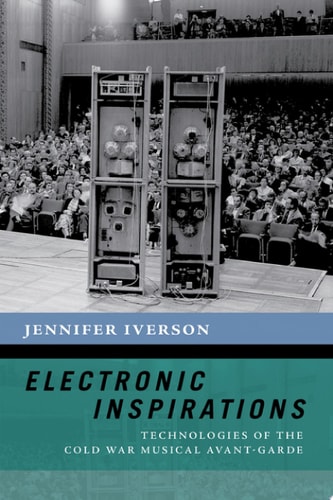
Electronic Inspirations: Technologies of the Cold War Musical Avant-Garde
0
0
As an Amazon Associate and affiliate partner, Menrva Books earns from qualifying purchases. Learn more
Author Description
For A Decimated Post-war West Germany, The Electronic Music Studio At The Wdr Radio In Cologne Was A Beacon Of Hope. Jennifer Iverson's Electronic Inspirations: Technologies Of The Cold War Musical Avant-garde Traces The Reclamation And Repurposing Of Wartime Machines, Spaces, And Discourses Into The New Sounds Of The Mid-century Studio. In The 1950s, When Technologies Were Plentiful And The Need For Reconstruction Was Great, West Germany Began To Rebuild Its Cultural Prestige Via Aesthetic And Technical Advances. The Studio's Composers, Collaborating With Scientists And Technicians, Coaxed Music From Sine-tone Oscillators, Noise Generators, Band-pass Filters, And Magnetic Tape. Together, They Applied Core Tenets From Information Theory And Phonetics, Reclaiming Military Communication Technologies As Well As Fascist Propaganda Broadcasting Spaces. The Electronic Studio Nurtured A Revolutionary Synthesis Of Science, Technology, Politics, And Aesthetics. Its Esoteric Sounds Transformed Mid-century Music And Continue To Reverberate Today. Electronic Music--echoing Both Cultural Anxiety And Promise--is A Quintessential Cold War Innovation.
Menrva's Summary
THE THESIS
How did the repurposing of post-war military and communication technologies in West Germany facilitate the emergence of the electronic music avant-garde? Jennifer Iverson, a musicologist specializing in mid-century European modernism, examines the intersection of technical reconstruction and cultural prestige in the 1950s. By analyzing the operations of the WDR studio in Cologne, she argues that the synthesis of information theory, phonetics, and repurposed wartime hardware created a unique aesthetic framework that defined the Cold War era.
THE SCOPE MAP
What You Will Find
- Technical analysis of sine-tone oscillators, noise generators, and magnetic tape usage.
- Historical documentation of the WDR radio studio in Cologne.
- Integration of information theory and phonetic principles into musical composition.
- Examination of the transition from fascist propaganda infrastructure to avant-garde creative spaces.
Scope Limits
- The text does not provide a comprehensive history of electronic music outside of the specific West German context.
- It does not focus on the commercial or popular music applications of these technologies.
THE AUTHORITY PERSPECTIVE
Scholars and music historians identify this work as a rigorous examination of the material conditions that enabled the development of early electronic music. Readers frequently note the academic density of the prose, which assumes a foundational understanding of both music theory and mid-century political history.
Page Count:
272
Publication Date:
2018-01-01
Publisher:
Oxford University Press
ISBN-10:
019086821X
ISBN-13:
9780190868215
German history
Music History
Technology
Cold War
Community Tags
Similar Books