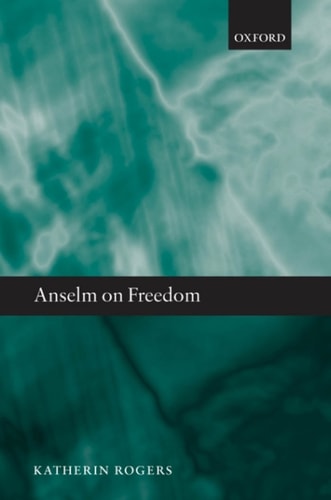
Anselm on Freedom
0
0
As an Amazon Associate and affiliate partner, Menrva Books earns from qualifying purchases. Learn more
Author Description
Can human beings be free and responsible if there is a God? Anselm of Canterbury, the first Christian philosopher to propose that human beings have a really robust free will, offers viable answers to questions which have plagued religious people for at least two thousand years: If divine grace cannot be merited and is necessary to save fallen humanity, how can there be any decisive role for individual free choice to play? If God knows today what you are going to choose tomorrow, then when tomorrow comes you have to choose what God foreknew, so how can your choice be free? If human beings must have the option to choose between good and evil in order to be morally responsible, must God be able to choose evil? Anselm answers these questions with a sophisticated theory of free will which defends both human freedom and the sovereignty and goodness of God.
Menrva's Summary
THE THESIS
This book investigates whether human free will and moral responsibility can coexist with the concepts of divine foreknowledge and grace. Katherin A. Rogers, a scholar specializing in Anselmian philosophy, examines the medieval thinker's arguments to reconcile the apparent conflict between human agency and divine sovereignty. By analyzing Anselm's specific definitions of freedom, the text provides a framework for understanding how an omniscient God and a free human subject interact within a theological system.
THE SCOPE MAP
What You Will Find
- Analysis of Anselm of Canterbury's treatises on free will and divine foreknowledge
- Exploration of the relationship between divine grace and human merit
- Examination of the necessity of the ability to choose evil for moral responsibility
- Philosophical arguments regarding the nature of divine goodness and human choice
Scope Limits
- The text does not provide a comprehensive history of all medieval theories of free will
- It does not address modern secular or neuroscientific perspectives on determinism
THE AUTHORITY PERSPECTIVE
Scholars and students of medieval philosophy frequently cite this work as a clear and rigorous exposition of Anselm's complex theological logic. Experts highlight the book as a foundational resource for those seeking to understand the intersection of classical theism and human moral agency.
Page Count:
240
Publication Date:
2008-01-01
Publisher:
Oxford University Press
ISBN-10:
0191552410
ISBN-13:
9780191552410
Philosophy
History of doctrines
Medieval Philosophy
Ethics
Metaphysics
Theology
Community Tags
Similar Books