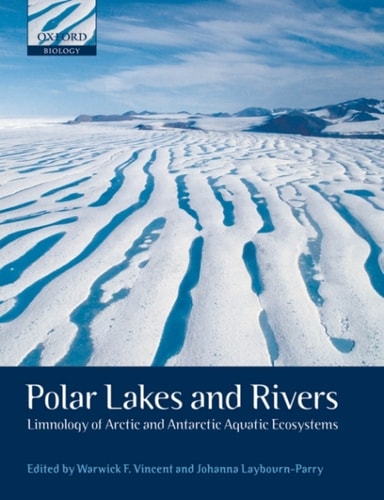
Polar Lakes and Rivers: Limnology of Arctic and Antarctic Aquatic Ecosystems
0
0
As an Amazon Associate and affiliate partner, Menrva Books earns from qualifying purchases. Learn more
Author Description
This is the first book to describe the ecology of high latitude lakes, rivers and glacial environments in both the North and South polar regions. From the lake-rich floodplains of the Arctic to the deep, enigmatic waters of Lake Vostok, Antarctica, these regions contain some of the most extraordinary aquatic ecosystems on Earth. They provide a fascinating diversity of habitats for plant, animal and microbial communities, and are proving to be valuable model systems for exploring many ecological themes including landscape-lake interactions, adaptation of life to environmental extremes, and controls on the structure and functioning of aquatic ecosystems. Some of these waters also have direct global implications, including permafrost thaw lakes as sources of greenhouse gases, subglacial aquatic environments as a storehouse of ancient microbes, and Arctic rivers as major inputs of freshwater and organic carbon to the World Ocean. Given that many polar areas are experiencing greater climate warming than at lower latitudes, these ecosystems can also be viewed as sentinels of global change. This timely volume brings together many of the world's leading researchers in polar limnology to describe these diverse aquatic environments and their ecology. It introduces each major ecosystem type, examines the similarities and differences between Arctic and Antarctic systems as well as their responses to environmental change, and describes new frontiers for future research. A glossary of terms is provided for non-specialists, and a set of colour plates introduces the ecosystems and their biota. Polar Lakes and Rivers will be of value to students and specialist researchers alike, as well as to those with a more general interest in aquatic ecology, polar environments or global change who require an authoritative overview of this fast emerging topic.
Menrva's Summary
THE THESIS
This volume investigates the ecological structure, function, and environmental significance of high-latitude aquatic ecosystems in both the Arctic and Antarctic regions. Authors Johanna Laybourn-Parry and Warwick F. Vincent, both established experts in polar biology, synthesize current research to explain how these extreme environments operate as model systems for ecological study. The text argues that these regions serve as critical sentinels for global climate change, providing essential data on carbon cycling, microbial life, and the impacts of warming on freshwater systems.
THE SCOPE MAP
What You Will Find
- Comparative analysis of Arctic and Antarctic lake, river, and glacial environments
- Examination of microbial communities and their adaptation to extreme cold
- Discussion of permafrost thaw lakes and their role in greenhouse gas emissions
- Overview of subglacial aquatic environments like Lake Vostok
- Glossary of technical terms for non-specialist readers
Scope Limits
- Does not provide an exhaustive catalog of every individual polar water body
- Focuses primarily on limnological and ecological processes rather than purely geological or glaciological mechanics
THE AUTHORITY PERSPECTIVE
Experts recognize this text as a foundational resource for understanding the unique biological and chemical processes of polar aquatic systems. Readers frequently note the academic density of the prose, which serves as a comprehensive reference for both students and professional researchers in the field.
Page Count:
352
Publication Date:
2008-01-01
Publisher:
Oxford University Press
ISBN-10:
0191550183
ISBN-13:
9780191550188
Science
Limnology
Ecology
Nature
Biology
Polar Studies
Community Tags
Other Editions(2)
Similar Books






Reader Comments
Share Your Thoughts
No comments yet. Be the first to share your thoughts!