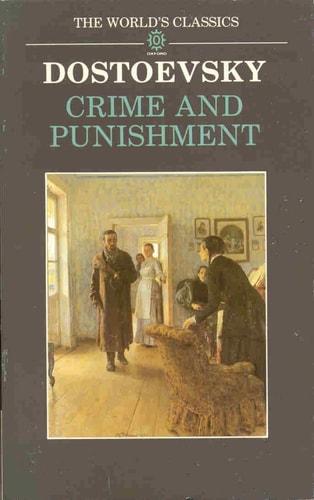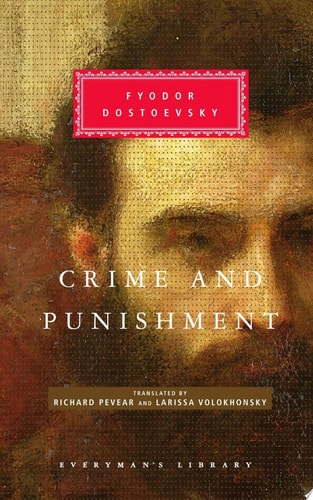
Crime and Punishment
0
0
As an Amazon Associate and affiliate partner, Menrva Books earns from qualifying purchases. Learn more
Author Description
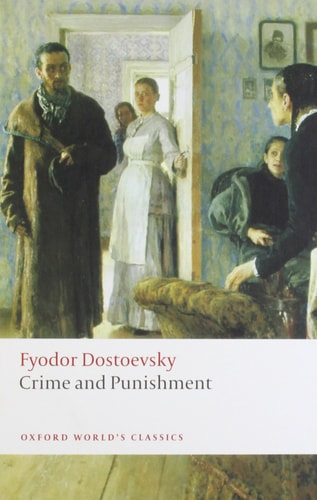
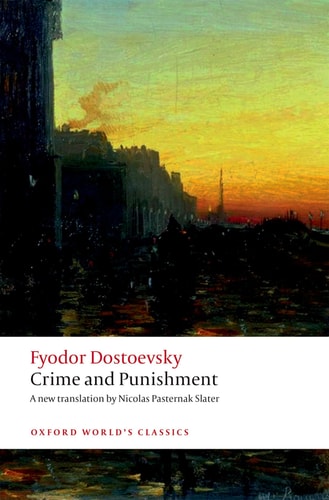
Crime And Punishment Is The Story Of A Murder Committed On Principle, Of A Killer Who Wishes By His Action To Set Himself Outside And Above Society. A Novel Of Fearful Tension, Physical, And Psychological, It Is Pervaded By Dostoevsky's Sinister Evocation Of St Petersburg, Yet In The Life Of Its Gloomy Tenements And Drink-shops Provides Moments Of Wild Humour. Crime And Punishment Was Marked By Dostoevsky's Own Harrowing Experiences. He Had Himself Undergone Interrogation And Trial, And Was Condemned To Death, A Sentence Commuted To Penal Servitude. In Prison He Was Particularly Impressed By One Hardened Murderer Who Seemed To Have Attained A Spiritual Equilibrium Beyond Good And Evil: Yet Witnessing The Misery Of Other Convicts Also Engendered In Dostoevsky A Belief In The Christian Idea Of Salvation Through Suffering. About The Series: For Over 100 Years Oxford World's Classics Has Made Available The Widest Range Of Literature From Around The Globe. Each Affordable Volume Reflects Oxford's Commitment To Scholarship, Providing The Most Accurate Text Plus A Wealth Of Other Valuable Features, Including Expert Introductions By Leading Authorities, Helpful Notes To Clarify The Text, Up-to-date Bibliographies For Further Study, And Much More.
Menrva's Summary
THE PULSE
Rodion Raskolnikov, an impoverished former student in St. Petersburg, commits a calculated murder to test his theory that extraordinary individuals exist above moral law. Driven by a desire to prove his intellectual superiority, Raskolnikov isolates himself from society while grappling with the physical and psychological consequences of his crime. The narrative follows his descent into paranoia and his eventual confrontation with the investigator Porfiry Petrovich, who suspects his guilt. The story unfolds through a third-person limited perspective that focuses intensely on Raskolnikov's internal state, capturing the claustrophobic atmosphere of the city's slums. The conflict pits his nihilistic philosophy against the moral and spiritual realities of his environment.
INSIDE THE PAGES
- Psychological exploration of guilt and moral justification
- Detailed depiction of 19th-century St. Petersburg
- Philosophical debates regarding the 'superman' concept
- Use of internal monologue to track mental deterioration
- Contrast between squalid urban settings and moments of dark humor
- Exploration of Christian themes of redemption through suffering
- Tension-filled cat-and-mouse dynamic between criminal and investigator
- Examination of social inequality and poverty
THE COLLECTIVE ECHO
Discussion often centers on the effectiveness of Dostoevsky's portrayal of a fractured psyche under extreme pressure. Readers frequently highlight the intense, claustrophobic atmosphere that mirrors the protagonist's internal state throughout the narrative. Critics often note the balance between the philosophical inquiries into morality and the visceral, gritty realism of the urban setting. The work remains a primary point of reference for those interested in the intersection of ethics, crime, and human redemption. Many readers find the pacing deliberate, allowing for a deep examination of the protagonist's shifting motivations and eventual psychological collapse.
Page Count:
564
Publication Date:
1995-01-01
Publisher:
Oxford University Press
ISBN-10:
0191560316
ISBN-13:
9780191560316
Crime
Psychological
Saint petersburg russia fiction
Fiction psychological
Philosophical
Classic Literature
Russian