Superconductivity: A Very Short Introduction
0
0
As an Amazon Associate and affiliate partner, Menrva Books earns from qualifying purchases. Learn more
Author Description
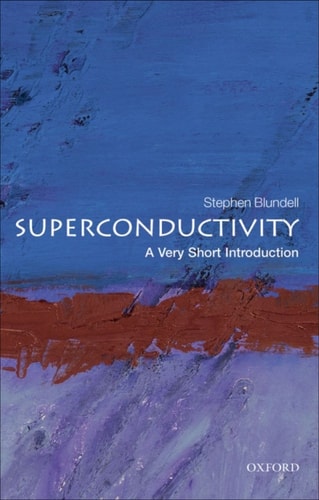
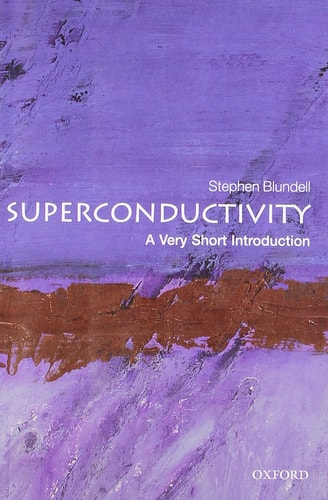
Superconductivity is one of the most exciting areas of research in physics today. Outlining the history of its discovery, and the race to understand its many mysterious and counter-intuitive phenomena, this Very Short Introduction explains in accessible terms the theories that have been developed, and how they have influenced other areas of science, including the Higgs boson of particle physics and ideas about the early Universe. It is an engaging and informative account of a fascinating scientific detective story, and an intelligible insight into some deep and beautiful ideas of physics. ABOUT THE SERIES: The Very Short Introductions series from Oxford University Press contains hundreds of titles in almost every subject area. These pocket-sized books are the perfect way to get ahead in a new subject quickly. Our expert authors combine facts, analysis, perspective, new ideas, and enthusiasm to make interesting and challenging topics highly readable.
Menrva's Summary
THE THESIS
This book investigates the fundamental principles of superconductivity and its broader implications for modern physics. Stephen J. Blundell, a professor of physics at the University of Oxford, utilizes historical context and theoretical frameworks to explain how superconductivity functions. He connects these phenomena to complex concepts such as the Higgs boson and early universe cosmology to demonstrate the interconnected nature of physical laws.
THE SCOPE MAP
What You Will Find
- Historical timeline of superconductivity research
- Explanations of counter-intuitive quantum phenomena
- Theoretical links between superconductivity and particle physics
- Conceptual overview of the BCS theory and its successors
Scope Limits
- Does not provide advanced mathematical derivations or technical proofs
- Does not serve as a comprehensive laboratory manual for experimental physics
THE AUTHORITY PERSPECTIVE
Experts and readers recognize this text as a highly accessible entry point for students and laypeople interested in condensed matter physics. The prose is noted for its clarity in distilling complex quantum mechanical concepts into manageable explanations.
Page Count:
169
Publication Date:
2009-01-01
Publisher:
OUP Oxford
ISBN-10:
0191579092
ISBN-13:
9780191579097
Non-Fiction
Science
Technology & Engineering
Physics
Trades & Technology
Community Tags
Other Editions(3)
Similar Books