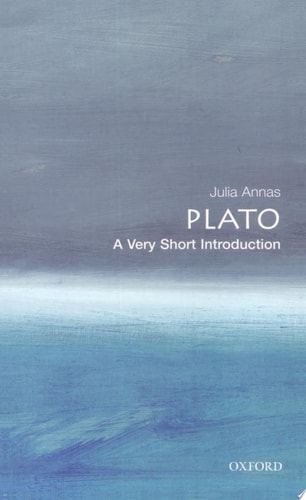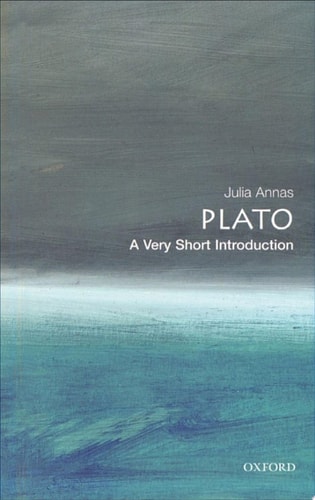
Plato: A Very Short Introduction
0
0
As an Amazon Associate and affiliate partner, Menrva Books earns from qualifying purchases. Learn more
Author Description
This lively and accessible introduction to Plato focuses on the philosophy and argument of his writings, drawing the reader into Plato's way of doing philosophy, and the general themes of his thinking. This is not a book to leave the reader standing in the outer court of introduction and background information, but leads directly into Plato's argument. It looks at Plato as a thinker grappling with philosophical problems in a variety of ways, rather than a philosopher with a fully worked-out system. It includes a brief account of Plato's life and the various interpretations that have been drawn from the sparse remains of information. It stresses the importance of the founding of the Academy and the conception of philosophy as a subject. Julia Annas discusses Plato's style of writing: his use of the dialogue form, his use of what we today call fiction, and his philosophical transformation of myths. She also looks at his discussions of love and philosophy, his attitude to women, and to homosexual love, explores Plato's claim that virtue is sufficient for happiness, and touches on his arguments for the immortality of the soul and his ideas about the nature of the universe. ABOUT THE SERIES: The Very Short Introductions series from Oxford University Press contains hundreds of titles in almost every subject area. These pocket-sized books are the perfect way to get ahead in a new subject quickly. Our expert authors combine facts, analysis, perspective, new ideas, and enthusiasm to make interesting and challenging topics highly readable.
Menrva's Summary
THE THESIS
This book investigates the core philosophical arguments and methodologies employed by Plato to address fundamental questions regarding ethics, the soul, and the nature of reality. Julia E. Annas, a distinguished scholar of ancient philosophy, utilizes the surviving dialogues to present Plato not as a dogmatic system-builder, but as an active thinker engaged in evolving inquiry. The text prioritizes direct engagement with Platonic arguments over mere biographical background, framing his work within the context of the early Academy.
THE SCOPE MAP
What You Will Find
- Analysis of the dialogue form and the use of myth as a philosophical tool
- Examination of Platonic views on virtue, happiness, and the immortality of the soul
- Discussion of social themes including the status of women and the nature of love
- Overview of the historical founding of the Academy
Scope Limits
- Does not provide an exhaustive or definitive biography due to the scarcity of historical records
- Does not attempt to reconcile all dialogues into a single, static philosophical system
THE AUTHORITY PERSPECTIVE
Experts frequently cite this work as a highly effective entry point for students seeking to understand the mechanics of Platonic thought without becoming lost in excessive academic jargon. Readers often note that the prose remains accessible while maintaining the intellectual rigor expected of the Oxford University Press series.
Page Count:
144
Publication Date:
2003-01-01
Publisher:
OUP Oxford
ISBN-10:
019157922X
ISBN-13:
9780191579226
Non-Fiction
Philosophy
History & Surveys
History of Ideas
Academic