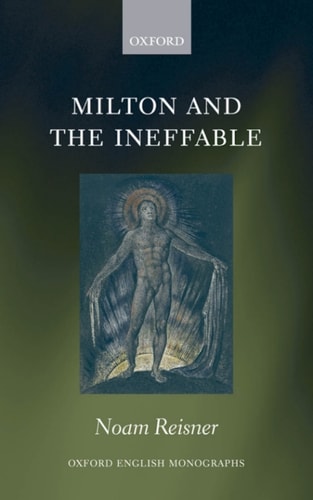
Milton and the Ineffable
0
0
As an Amazon Associate and affiliate partner, Menrva Books earns from qualifying purchases. Learn more
Author Description
Milton and the Ineffable offers a comprehensive reassessment of Milton's poetic oeuvre in light of the literary and conceptual problem posed by the poet's attempt to put into words that which is unsayable and beyond representation. The struggle with the ineffability of sacred or transcendental subject matter in many ways defines Milton's triumphs as a poet, especially in Paradise Lost, and goes to the heart of the central critical debates to engage his readers over the centuries and decades. Taking an interdisciplinary conceptual approach, this study sheds fresh light on many of these debates by situating his poetics of ineffability in the context of the intellectual cross-currents of Renaissance humanism and Protestant theology. The book plots an ongoing narrative in Milton's poetry about silence and ineffable mystery which forms the intellectual framework within which Milton continually shapes and reshapes his poetic vision of the created universe and the elect man's singular place within it. From the free paraphrase of Psalm 114 to Paradise Regained, the presence of the ineffable insinuates itself into Milton's poetry as both the catalyst and check for his poetic creativity, where the fear of silence and ineffable mystery on the one hand, and the yearning to lose himself and his readers in unspeakable rapture on the other, becomes a struggle for poetic self-determination and finally redemption.
Menrva's Summary
THE THESIS
How does John Milton navigate the tension between the limitations of language and the representation of transcendental, ineffable subject matter? Noam Reisner, a scholar of early modern literature, investigates this problem by examining Milton's poetic corpus through the intersection of Renaissance humanism and Protestant theology. The study argues that the struggle to articulate the unsayable serves as a primary catalyst for Milton's creative process, shaping his vision of the universe and the human condition across his major works.
THE SCOPE MAP
What You Will Find
- Analysis of Milton's poetic works ranging from Psalm 114 to Paradise Regained.
- A conceptual framework linking poetic silence to theological mystery.
- Examination of the intellectual cross-currents of the Renaissance period.
Scope Limits
- The study focuses primarily on the thematic problem of ineffability rather than a comprehensive biographical account of the poet.
- It does not provide an exhaustive analysis of Milton's political prose writings.
THE AUTHORITY PERSPECTIVE
Scholars recognize this work as a rigorous contribution to Miltonic studies, particularly for its interdisciplinary approach to the poet's linguistic challenges. Readers frequently note the academic density of the prose, which is intended for advanced students and researchers of seventeenth-century literature.
Page Count:
336
Publication Date:
2009-01-01
Publisher:
OUP Oxford
ISBN-10:
0191572357
ISBN-13:
9780191572357
Poetry
English & College Success
English
Theology
Literary Criticism
English literature
Academic
Community Tags
Other Editions(3)

Similar Books