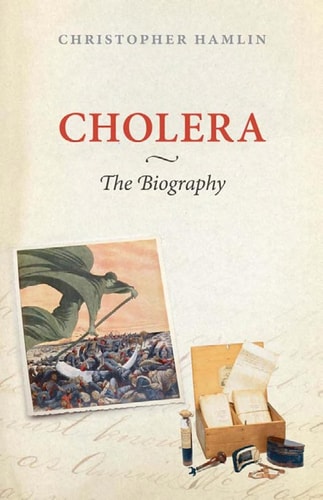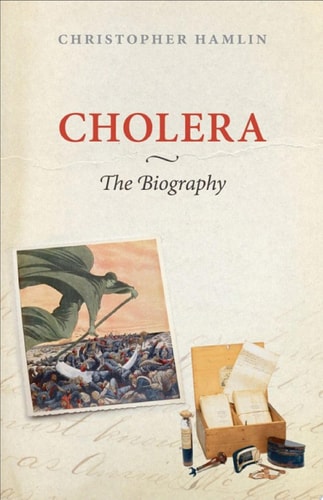
Cholera: The Biography
0
0
As an Amazon Associate and affiliate partner, Menrva Books earns from qualifying purchases. Learn more
Author Description
Cholera is a frightening disease. Victims are wracked by stomach cramps and suffer intense diarrhoea. Death can come within hours. Though now seeming a distant memory in Europe, which suffered several epidemics in the 19th century before John Snow identified the link with water, it is still a serious threat in many parts of the world - Zimbabwe is a recent example. Snow's discovery was one of the great breakthroughs of epidemiology and a wonderful story from the history of science. Later came the discovery of the culprit organism - Cholera vibrio - understanding of its life cycle, and the development of a vaccine. But the problem of cholera has not disappeared. This book tells the story of cholera, and looks at both the medical success in the West, and the different attitudes to the disease in countries in which it is prevalent as opposed to those in which it put in a temporary appearance. Unlike other books on cholera, which focus on the experience of particular countries, Christopher Hamlin's account draws together the experiences from various countries, both those that were colonies and those that were not. Cholera: the biography is part of the Oxford series, Biographies of Diseases, edited by William and Helen Bynum. In each individual volume an expert historian or clinician tells the story of a particular disease or condition throughout history - not only in terms of growing medical understanding of its nature and cure, but also shifting social and cultural attitudes, and changes in the meaning of the name of the disease itself.
Menrva's Summary
THE THESIS
This book investigates the historical, medical, and social trajectory of cholera to understand why it remains a persistent global threat despite significant scientific advancements. Christopher Hamlin, a historian of science and medicine, utilizes a comparative global framework to analyze how different societies have perceived and managed the disease. By contrasting Western medical successes with the ongoing challenges in developing nations, the author argues that cholera is as much a social and political phenomenon as it is a biological one.
THE SCOPE MAP
What You Will Find
- A comparative analysis of cholera outbreaks across colonial and non-colonial nations.
- The history of epidemiological breakthroughs, including John Snow’s water-borne transmission theory.
- An examination of the evolution of medical understanding regarding the Vibrio cholerae organism and vaccine development.
Scope Limits
- The text does not provide a clinical manual for the treatment of individual patients.
- It does not focus on the experience of a single country, but rather synthesizes global trends.
THE AUTHORITY PERSPECTIVE
Experts recognize this work as a significant contribution to the history of medicine for its ability to contextualize disease within shifting cultural and political landscapes. Readers frequently note the academic density of the prose, which provides a comprehensive overview suitable for students and historians alike.
Page Count:
355
Publication Date:
2009-01-01
Publisher:
OUP Oxford
ISBN-10:
0191580155
ISBN-13:
9780191580154
History
Public Health
Science History
Medicine
Epidemiology
Economics - Theory
Non-Classifiable
Biography of Disease