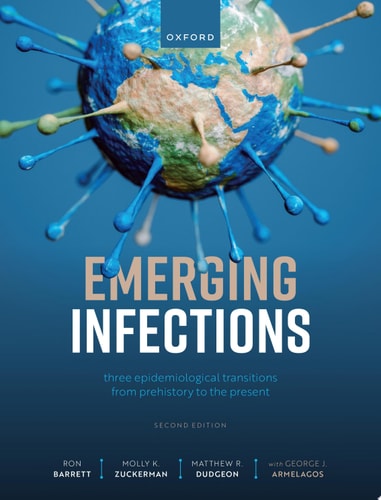
Emerging Infections: Three Epidemiological Transitions from Prehistory to the Present
0
0
As an Amazon Associate and affiliate partner, Menrva Books earns from qualifying purchases. Learn more
Author Description
Serving as both an accessible textbook and an original synthesis of interdisciplinary scholarship, Emerging Infections traces the social and environmental determinants of human infectious diseases from the Paleolithic to the present day. Contrary to earlier predictions of a post-infectious era, humanity now faces a post-antimicrobial era with the emergence of drug-resistant pathogens and the entry of new and deadly viruses such as Ebola and COVID-19 in the human population. Yet despite the novelty of these infections, their evolution is primarily driven by the same human activities of subsistence, settlement, and social organization that have been recurring over the last ten thousand years.Approaching these activities from a biocultural perspective, this book examines the prehistory and history of human infectious diseases. Much has happened in the decade since the first edition, with significant developments in both disease research and in the evolution of the diseases themselves. As such, this new edition has been expanded to include recent epidemics of Ebola, Zika, MERS, and of course, COVID-19. Indeed, the book's biocultural approach is especially relevant to the COVID-19 pandemic, examining it from a deep time perspective and placing it within a much-needed explanatory framework.Emerging Infections is suitable for advanced undergraduates, graduates, and researchers in anthropology, the medical social sciences, public health, and the history of medicine. The book will also appeal to a more general readership with an interest in public health and infectious diseases.
Menrva's Summary
THE THESIS
This book investigates how human social and environmental behaviors have consistently driven the evolution and emergence of infectious diseases across three distinct historical transitions. The authors, a team of anthropologists and medical researchers, utilize a biocultural framework to analyze how subsistence, settlement patterns, and social organization influence pathogen transmission. By synthesizing archaeological data with contemporary epidemiological research, they argue that modern outbreaks are not isolated anomalies but are deeply rooted in long-standing human ecological interactions.
THE SCOPE MAP
What You Will Find
- Analysis of three major epidemiological transitions from the Paleolithic era to the modern post-antimicrobial age.
- Application of biocultural theory to explain the emergence of pathogens like Ebola, Zika, MERS, and COVID-19.
- Examination of the intersection between human social evolution and microbial adaptation.
Scope Limits
- The text does not provide clinical medical guidance for individual treatment or diagnosis of specific infections.
- It does not focus on the molecular biology of pathogens in isolation from their social and environmental contexts.
THE AUTHORITY PERSPECTIVE
Experts recognize this work as a foundational interdisciplinary text that bridges the gap between biological anthropology and public health policy. Readers frequently note the academic density of the prose, which serves as a rigorous resource for students and researchers in the medical social sciences.
Page Count:
176
Publication Date:
2024-01-01
Publisher:
Oxford University Press
ISBN-10:
0192843133
ISBN-13:
9780192843135
History
Politics
Epidemiology
Medicine history
Public Health
Medicine
Anthropology
Physical
Infectious Diseases
Community Tags
Similar Books