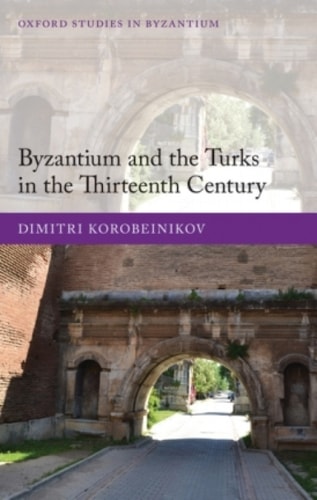
Byzantium and the Turks in the Thirteenth Century
0
0
As an Amazon Associate and affiliate partner, Menrva Books earns from qualifying purchases. Learn more
Author Description
At the beginning of the thirteenth century Byzantium was still one of the most influential states in the eastern Mediterranean, possessing two-thirds of the Balkans and almost half of Asia Minor. After the capture of Constantinople in 1204 during the Fourth Crusade, the most prominent and successful of the Greek rump states was the Empire of Nicaea, which managed to re-capture the city in 1261 and restore Byzantium. The Nicaean Empire, like Byzantium of the Komnenoi and Angeloi of the twelfth century, went on to gain dominant influence over the Seljukid Sultanate of Rum in the 1250s. However, the decline of the Seljuk power, the continuing migration of Turks from the east, and what effectively amounted to a lack of Mongol interest in western Anatolia, allowed the creation of powerful Turkish nomadic confederations in the frontier regions facing Byzantium. By 1304, the nomadic Turks had broken Byzantium's eastern defences; the Empire lost its Asian territories forever, and Constantinople became the most eastern outpost of Byzantium. At the beginning of the fourteenth century the Empire was a tiny, second-ranking Balkan state, whose lands were often disputed between the Bulgarians, the Serbs, and the Franks. Using Greek, Arabic, Persian, and Ottoman sources, Byzantium and the Turks in the Thirteenth Century presents a new interpretation of the Nicaean Empire and highlights the evidence for its wealth and power. It explains the importance of the relations between the Byzantines and the Seljuks and the Mongols, revealing how the Byzantines adapted to the new and complex situation that emerged in the second half of the thirteenth century. Finally, it turns to the Empire's Anatolian frontiers and the emergence of the Turkish confederations, the biggest challenge that the Byzantines faced in the thirteenth century.
Menrva's Summary
THE THESIS
This work investigates the geopolitical transformation of the Byzantine Empire during the thirteenth century, specifically focusing on how the Nicaean Empire managed its complex relationships with the Seljukid Sultanate and the Mongol Empire. Dimitri Korobeinikov, a specialist in Byzantine and Anatolian history, utilizes a multi-lingual array of primary sources—including Greek, Arabic, Persian, and Ottoman texts—to challenge traditional narratives of inevitable decline. He argues that the Nicaean Empire was a sophisticated, wealthy, and adaptive state that successfully navigated the shifting power dynamics of the eastern Mediterranean before the eventual collapse of its Anatolian frontiers.
THE SCOPE MAP
What You Will Find
- Analysis of the Nicaean Empire's political and economic strategies between 1204 and 1304.
- Examination of diplomatic and military interactions between Byzantines, Seljuks, and Mongols.
- Investigation into the formation of Turkish nomadic confederations in the Anatolian frontier zones.
- Synthesis of diverse primary source material from multiple linguistic traditions.
Scope Limits
- The study focuses primarily on the thirteenth century and does not provide an exhaustive history of the later Ottoman rise.
- The analysis is centered on the geopolitical and military aspects of the frontier, with less emphasis on internal social or religious history.
THE AUTHORITY PERSPECTIVE
Scholars and historians recognize this text as a rigorous, source-heavy contribution to the study of the late Byzantine period. Readers frequently note the academic density of the prose and the author's meticulous attention to cross-referencing disparate linguistic archives.
Page Count:
400
Publication Date:
2014-01-01
Publisher:
OUP Oxford
ISBN-10:
0191017949
ISBN-13:
9780191017940
History
Ancient History
Turkey history
Military History
Middle Eastern
Political History
Byzantine History
Community Tags
Similar Books