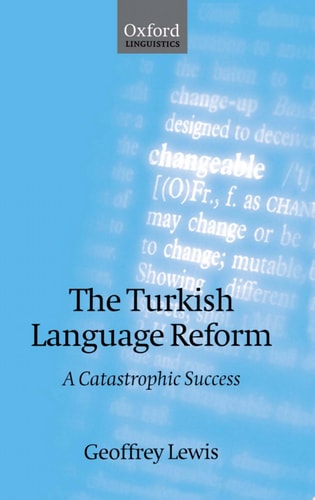
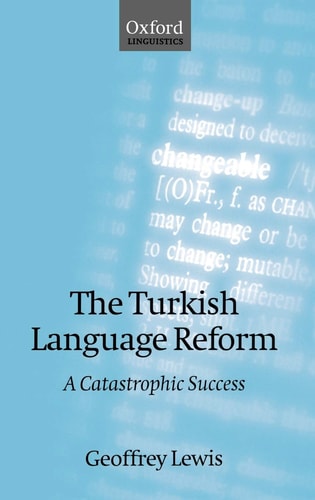
The Turkish Language Reform: A Catastrophic Success
0
0
As an Amazon Associate and affiliate partner, Menrva Books earns from qualifying purchases. Learn more
Author Description
This is the first full account of the transformation of Ottoman Turkish into modern Turkish. It is based on the author's knowledge, experience and continuing study of the language, history, and people of Turkey. That transformation of the Turkish language is probably the most thorough-going piece of linguistics engineering in history. Its prelude came in 1928, when the Arabo-Persian alphabet was outlawed and replaced by the Latin alphabet. It began in earnest in 1930 when Ataturk declared: Turkish is one of the richest of languages. It needs only to be used with discrimination. The Turkish nation, which is well able to protect its territory and its sublime independence, must also liberate its language from the yoke of foreign languages. A government-sponsored campaign was waged to replace words of Arabic or Persian origin by words collected from popular speech, or resurrected from ancient texts, or coined from native roots and suffixes. The snag - identified by the author as one element in the catastrophic aspect of the reform - was that when these sources failed to provide the needed words, the reformers simply invented them. The reform was central to the young republic's aspiration to be Western and secular, but it did not please those who remained wedded to their mother tongue or to the Islamic past. The controversy is by no means over, but Ottoman Turkish is dead. Professor Lewis both acquaints the general reader with the often bizarre, sometimes tragicomic but never dull story of the reform, and provides a lively and incisive account for students of Turkish and the relations between culture, politics and language with some stimulating reading. The author draws on his own wide experience of Turkey and his personal knowledge of many of the leading actors. The general reader will not be at a disadvantage, because no Turkish word or quotation has been left untranslated. This book is important for the light it throws on twentieth-century Turkish politics and society.
Menrva's Summary
THE THESIS
This book investigates the historical, political, and linguistic consequences of the state-sponsored transformation of Ottoman Turkish into modern Turkish. Geoffrey Lewis, a renowned scholar of Turkish studies, utilizes his extensive personal experience and academic expertise to analyze the systematic replacement of Arabic and Persian loanwords with native or invented terminology. He argues that while the reform was a central pillar of the secular, Western-oriented Turkish Republic, the aggressive nature of this linguistic engineering resulted in a profound cultural and intellectual rupture.
THE SCOPE MAP
What You Will Find
- A detailed history of the 1928 alphabet reform and the subsequent linguistic purges.
- Analysis of the methodology used to coin new words from native roots and ancient texts.
- Examination of the intersection between national identity, secularism, and language policy.
Scope Limits
- The text does not provide a comprehensive dictionary of the Turkish language.
- It focuses primarily on the political and social implications rather than a purely technical linguistic analysis of syntax.
THE AUTHORITY PERSPECTIVE
Experts and historians recognize this work as the definitive account of the Turkish language reform, frequently citing its balance of scholarly rigor and accessible prose. Readers often note that the author's personal insights into the key figures of the era provide a unique perspective that elevates the text beyond a standard historical survey.
Page Count:
206
Publication Date:
1999-01-01
Publisher:
Oup Oxford
ISBN-10:
0191583227
ISBN-13:
9780191583223
History
Linguistics
Turkey
Community Tags
Other Editions(2)
Similar Books
Reader Comments
Share Your Thoughts
No comments yet. Be the first to share your thoughts!