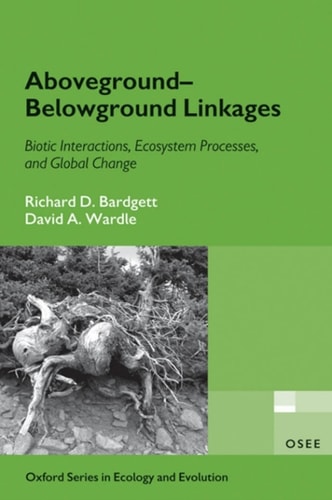
Aboveground-Belowground Linkages: Biotic Interactions, Ecosystem Processes, and Global Change
0
0
As an Amazon Associate and affiliate partner, Menrva Books earns from qualifying purchases. Learn more
Author Description
Aboveground-Belowground Linkages provides the most up-to-date and comprehensive synthesis of recent advances in our understanding of the roles that interactions between aboveground and belowground communities play in regulating the structure and function of terrestrial ecosystems, and their responses to global change. It charts the historical development of this field of ecology and evaluates what can be learned from the recent proliferation of studies on the ecological and biogeochemical significance of aboveground-belowground linkages. The book is structured around four key topics: biotic interactions in the soil; plant community effects; the role of aboveground consumers; and the influence of species gains and losses. A concluding chapter draws together this information and identifies a number of cross-cutting themes, including consideration of aboveground-belowground feedbacks that occur at different spatial and temporal scales, the consequences of these feedbacks for ecosystem processes, and how aboveground-belowground interactions link to human-induced global change.
Menrva's Summary
THE THESIS
This book investigates the critical regulatory roles that interactions between aboveground and belowground biotic communities play in maintaining terrestrial ecosystem function and responding to global environmental shifts. Authors David A. Wardle and Richard D. Bardgett, both established experts in soil ecology, synthesize decades of research to argue that terrestrial systems cannot be understood by studying surface or subterranean processes in isolation. They utilize a framework that integrates plant community dynamics, soil biodiversity, and consumer-resource interactions to demonstrate how these linkages influence broader biogeochemical cycles.
THE SCOPE MAP
What You Will Find
- Analysis of biotic interactions within soil food webs
- Evaluation of plant community effects on subterranean environments
- Examination of the role of aboveground consumers in soil processes
- Assessment of the impacts of species loss and gain on ecosystem stability
- Synthesis of feedbacks across varying spatial and temporal scales
Scope Limits
- Does not provide an exhaustive catalog of all global soil species
- Does not focus on marine or aquatic ecosystem linkages
THE AUTHORITY PERSPECTIVE
Experts recognize this work as a foundational synthesis for researchers and graduate students in ecology. Readers frequently note the academic density of the prose, which effectively bridges the gap between specialized soil science and broader ecosystem ecology.
Page Count:
312
Publication Date:
2010-01-01
Publisher:
Oxford University Press
ISBN-10:
0191591351
ISBN-13:
9780191591358
Biology
Climate Change
Biological Diversity
Ecosystems
Ecology
Community Tags
Similar Books