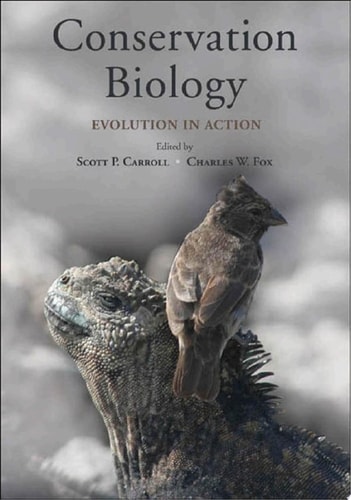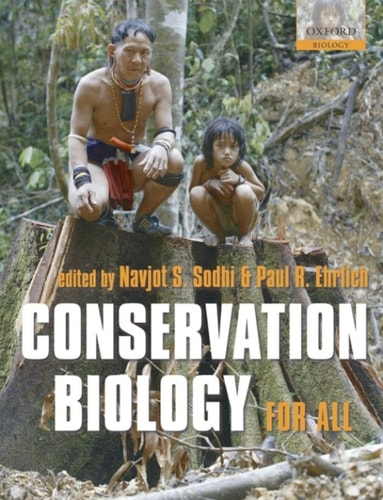
Conservation Biology for All
0
0
As an Amazon Associate and affiliate partner, Menrva Books earns from qualifying purchases. Learn more
Author Description
Conservation Biology for All provides cutting-edge but basic conservation science to a global readership. A series of authoritative chapters have been written by the top names in conservation biology with the principal aim of disseminating cutting-edge conservation knowledge as widely as possible. Important topics such as balancing conversion and human needs, climate change, conservation planning, designing and analyzing conservation research, ecosystem services, endangered species management, extinctions, fire, habitat loss, and invasive species are covered. Numerous textboxes describing additional relevant material or case studies are also included. The global biodiversity crisis is now unstoppable; what can be saved in the developing world will require an educated constituency in both the developing and developed world. Habitat loss is particularly acute in developing countries, which is of special concern because it tends to be these locations where the greatest species diversity and richest centres of endemism are to be found. Sadly, developing world conservation scientists have found it difficult to access an authoritative textbook, which is particularly ironic since it is these countries where the potential benefits of knowledge application are greatest. There is now an urgent need to educate the next generation of scientists in developing countries, so that they are in a better position to protect their natural resources.
Menrva's Summary
THE THESIS
This text investigates the core question of how to disseminate advanced conservation science to a global audience, particularly within developing nations where biodiversity loss is most acute. Navjot S. Sodhi and Paul R. Ehrlich curate contributions from leading experts in the field to provide a comprehensive framework for understanding and managing natural resources. The book argues that an educated constituency is required to mitigate the global biodiversity crisis and provides the technical knowledge necessary for the next generation of scientists to implement effective conservation strategies.
THE SCOPE MAP
What You Will Find
- Comprehensive coverage of topics including climate change, habitat loss, invasive species, and ecosystem services.
- Methodologies for designing and analyzing conservation research.
- Case studies and supplementary material presented in dedicated textboxes.
Scope Limits
- The text focuses primarily on global conservation principles rather than region-specific policy implementation.
- It does not provide exhaustive historical accounts of environmental legislation.
THE AUTHORITY PERSPECTIVE
Experts recognize this work as a foundational resource for students and practitioners, particularly those in developing regions who lack access to specialized literature. Readers frequently note the academic density of the prose and the high quality of the expert-authored chapters.
Page Count:
369
Publication Date:
2010-01-01
Publisher:
Oxford University Press, USA
ISBN-10:
0191574252
ISBN-13:
9780191574252
Science
Biology
Ecology
textbook
Conservation
Biological Diversity
Community Tags
Other Editions(2)
Similar Books