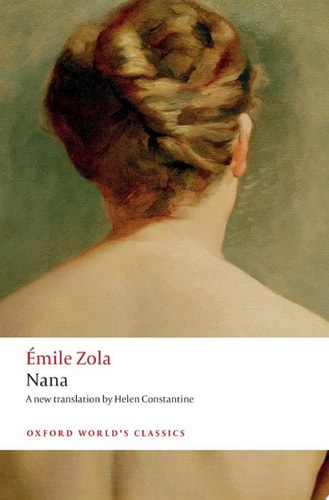
Nana
0
0
As an Amazon Associate and affiliate partner, Menrva Books earns from qualifying purchases. Learn more
Author Description
She was the golden beast, an unconscious force, the very scent of her could bring the world to ruin. Nana, daughter of a drunk and a laundress, is the Helen of Troy of Paris. A sexually magnetic high-class prostitute and actress, she becomes a celebrity, rapidly conquering society, ruining all men who fall under her spell-especially Count Muffat, Chamberlain to the Empress. Nana herself meets a terrible fate, consumed by her own dissipation and extravagance, just as the disastrous war with Prussia is declared. Nana is the ninth instalment in the twenty volume Rougon-Macquart series. The novel opens in 1867, the year of the World Fair, when Paris, thronged by a cosmopolitan élite, was la Ville Lumière, the glittering setting-and object-of Zola's scathing denunciation of society's hypocrisy and moral corruption. Nana comes to symbolize the Second Empire regime itself in all its excesses; but in the final chapters, the narrator seems to suggest that the coming disaster is not so much a result of the corruption of the Empire, as of rampant female sexuality.
Menrva's Summary
THE PULSE
The rise and inevitable decline of a Parisian courtesan serves as a mirror for the moral decay of the Second Empire. Nana, born into poverty, ascends to the heights of Parisian society through her physical allure and manipulative charm, eventually ensnaring powerful figures like Count Muffat. Her objective is the acquisition of wealth and status, yet she remains an unconscious force of destruction, leaving a trail of ruined men and bankrupt estates in her wake. The narrative utilizes a third-person perspective to observe the intersection of personal excess and the broader political instability of France on the brink of war.
INSIDE THE PAGES
- Detailed depiction of the Parisian theatrical world in the 1860s
- Exploration of the intersection between sexual power and social status
- Use of the protagonist as a symbol for the corruption of the Second Empire
- Naturalistic prose style focusing on heredity and environment
- Satirical portrayal of the aristocracy and the bourgeoisie
- Pacing that mirrors the rapid ascent and sudden collapse of the protagonist
- Integration of historical events such as the World Fair and the Prussian War
- Examination of the destructive nature of obsession and dissipation
THE COLLECTIVE ECHO
Readers and critics frequently highlight the novel as a definitive example of Zola's naturalistic approach to literature. Discussion often centers on the tension between the protagonist's agency and her role as a mere symbol of societal rot. Many observers note the clinical, almost detached manner in which the author documents the degradation of his characters. The pacing is often described as relentless, reflecting the chaotic energy of the era Zola depicts. Readers frequently emphasize that the book remains a significant study of how individual moral failure and systemic political corruption are inextricably linked.
Page Count:
432
Publication Date:
2020-01-01
Publisher:
OUP Oxford
ISBN-10:
0192545361
ISBN-13:
9780192545367
Historical Fiction
English & College Success
French literature
Social Commentary
Classic Literature
English
Naturalism
Community Tags
Other Editions(23)

BoD - Books on Demand
2022
Default edition
Independently Published
2020
OUP Oxford
2020

CreateSpace Independent Publishing Platform
2018

CreateSpace Independent Publishing Platform
2018

Editions Gallimard
2017

CreateSpace Independent Publishing Platform
2016

Pelekanos Books
2015

Xist Publishing
2015

CreateSpace Independent Publishing Platform
2014
CreateSpace Independent Publishing Platform
2013

Europäischer Literaturverlag
2013

Classic Books
2013
Kinoscript
2012

CreateSpace Independent Publishing Platform
2012
Oup Oxford
2009

eBooksLib
2009
North Books
2004

Classic Books
2001
Maxi-livres
2001
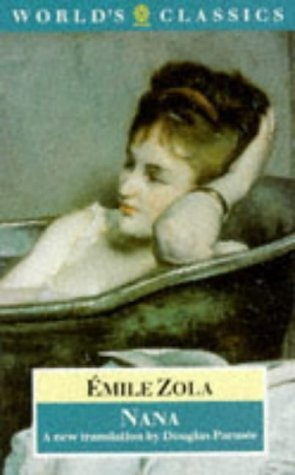
Oxford University Press
1992

Presses Pocket
1991
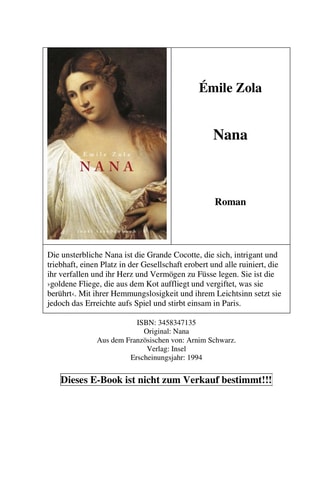
Insel-Verlag
1979
Similar Books




Reader Comments
Share Your Thoughts
No comments yet. Be the first to share your thoughts!