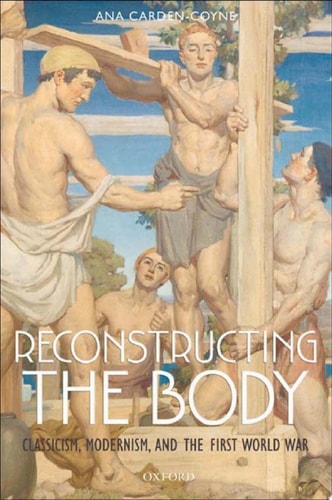
Reconstructing the Body: Classicism, Modernism, and the First World War
0
0
As an Amazon Associate and affiliate partner, Menrva Books earns from qualifying purchases. Learn more
Author Description
The First World War mangled faces, blew away limbs, and ruined nerves. Ten million dead, twenty million severe casualties, and eight million people with permanent disabilities - modern war inflicted pain and suffering with unsparing, mechanical efficiency. However, such horror was not the entire story. People also rebuilt their lives, their communities, and their bodies. From the ashes of war rose beauty, eroticism, and the promise of utopia. Ana Carden-Coyne investigates the cultures of resilience and the institutions of reconstruction in Britain, Australia, and the United States. Immersed in efforts to heal the consequences of violence and triumph over adversity, reconstruction inspired politicians, professionals, and individuals to transform themselves and their societies. Bodies were not to remain locked away as tortured memories. Instead, they became the subjects of outspoken debate, the objects of rehabilitation, and commodities of desire in global industries. Governments, physicians, beauty and body therapists, monument designers and visual artists looked to classicism and modernism as the tools for rebuilding civilization and its citizens. What better response to loss of life, limb, and mind than a body reconstructed?
Menrva's Summary
THE THESIS
How did the cultural and political frameworks of classicism and modernism shape the rehabilitation and societal reintegration of disabled veterans following the First World War? Ana Carden-Coyne, a historian specializing in the cultural history of war, examines the intersection of medical practice, aesthetic ideals, and state policy. She argues that the reconstruction of the wounded body was not merely a medical necessity but a deliberate cultural project that utilized classical and modernist tropes to redefine citizenship and national identity in the aftermath of mass trauma.
THE SCOPE MAP
What You Will Find
- Comparative analysis of reconstruction efforts in Britain, Australia, and the United States.
- Examination of the role of beauty therapy, prosthetics, and monument design in postwar recovery.
- Investigation into the commodification of the disabled body within global industries.
Scope Limits
- The study focuses primarily on Western nations and does not provide a comprehensive global survey of non-Western reconstruction efforts.
- The text prioritizes cultural and aesthetic analysis over purely clinical or technical medical histories.
THE AUTHORITY PERSPECTIVE
Scholars frequently cite this work for its nuanced exploration of how aesthetic ideals influenced the physical rehabilitation of veterans. Experts highlight the text as a significant contribution to the cultural history of the First World War, noting its ability to bridge the gap between medical history and the history of art and design.
Page Count:
359
Publication Date:
2009-01-01
Publisher:
OUP Oxford
ISBN-10:
0191609382
ISBN-13:
9780191609381
History
Australia
World War
Military History
Cultural History
Sociology
MEDICAL History
Modern History
Community Tags
Similar Books