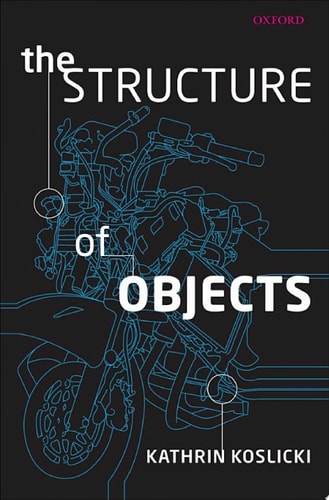
The Structure of Objects
0
0
As an Amazon Associate and affiliate partner, Menrva Books earns from qualifying purchases. Learn more
Author Description
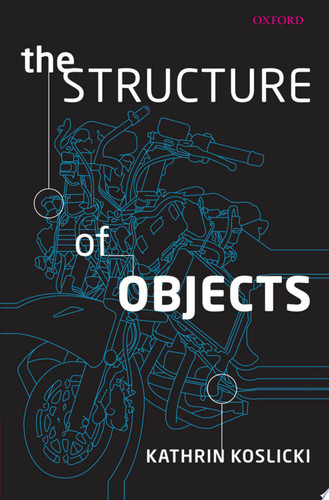
Kathrin Koslicki offers an analysis of ordinary materials objects, those material objects to which we take ourselves to be committed in ordinary, scientifically informed discourse. She focuses particularly on the question of how the parts of such objects are related to the wholes which they compose. Many philosophers today find themselves in the grip of an exceedingly deflationary conception of what it means to be an object. According to this conception, any plurality of objects, no matter how disparate or gerrymandered, itself composes an object, even if the objects in question fail to exhibit interesting similarities, internal unity, cohesion, or causl interaction amongst each other. This commitment to initially counterintuitive objects follows from the belief that no principled set of criteria is available by means of which to distinguish intuitively gerrymandered objects from commonsensical ones; the project of this book is to persuade the reader that systematic principles can be found by means of which composition can be restricted, and hence that we need not embrace this deflationary approach to the question of what it means to be an object. To this end, a more full-blooded neo-Aristotelian account of parthood and composition is developed according to which objects are structured wholes: it is integral to the existence and identity of an object, on this conception, that its parts exhibit a certain manner of arrangement. This structure-based conception of parthood and composition is explored in detail, along with some of its historical precursors as well as some of its contemporary competitors.
Menrva's Summary
THE THESIS
This work investigates whether systematic principles can be established to restrict the composition of material objects, thereby challenging the prevailing deflationary view that any plurality of objects constitutes a single whole. Kathrin Koslicki, a philosopher specializing in metaphysics and ancient philosophy, utilizes a neo-Aristotelian framework to argue that an object's identity is defined by the structured arrangement of its parts. By rejecting the notion that disparate collections of matter automatically form objects, she proposes a more robust account of parthood that emphasizes internal unity and cohesion.
THE SCOPE MAP
What You Will Find
- A detailed examination of neo-Aristotelian mereology and the concept of structured wholes.
- A critique of contemporary deflationary theories regarding object composition.
- An analysis of historical precursors to structure-based ontological theories.
Scope Limits
- The text focuses primarily on material objects rather than abstract entities or properties.
- It does not provide an exhaustive survey of every minor contemporary position in mereology.
THE AUTHORITY PERSPECTIVE
Philosophers and scholars of metaphysics frequently cite this text as a significant contribution to the debate on mereological composition. Readers often note the high level of academic density and the rigorous logical argumentation required to engage with the author's neo-Aristotelian framework.
Page Count:
316
Publication Date:
2008-01-01
Publisher:
OUP Oxford
ISBN-10:
0191609137
ISBN-13:
9780191609138
Philosophy
Whole And Parts philosophy
Structuralism
Metaphysics
Ontology
Community Tags
Other Editions(3)
Similar Books