
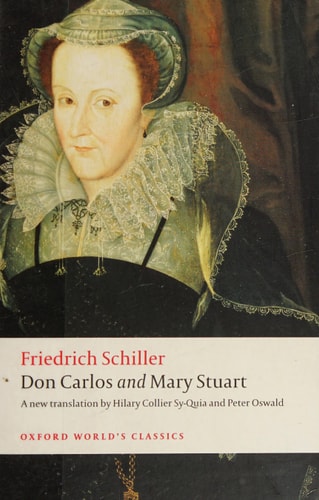
Don Carlos and Mary Stuart
0
0
As an Amazon Associate and affiliate partner, Menrva Books earns from qualifying purchases. Learn more
Author Description
Don Carlos and Mary Stuart, two of German literature's greatest dramas, deal with the timeless issues of power, freedom, and justice. Dating from 1787 and 1800 respectively, one play was written before the French Revolution, the other in its aftermath. Both dramatize periods of crisis in sixteenth-century Europe, and in doing so reflect Schiller's passionate engagement with the great themes of his own age - justice, power, freedom of conscience, legitimacy of government. A youthful work, Don Carlos shows the victory of the forces of reaction over the representatives of a new age. Mary Stuart shows the struggle of the Scottish queen in her last days of her life, not only for her freedom, but also for peace with her conscience, and that of her English rival, Elizabeth I, with the challenge of ruling justly. A vivid imaginative experience when read, these plays, with their starkly contrasting characters and thrilling confrontations, also demonstrate Schiller's brilliant stagecraft. These new translations into blank verse are accurate, elegant, and playable. The introduction, notes, and chronology set the plays in their cultural and intellectual background, while a family tree explains the historical relationship bewteen Don Carlos and Mary Stuart. ABOUT THE SERIES: For over 100 years Oxford World's Classics has made available the widest range of literature from around the globe. Each affordable volume reflects Oxford's commitment to scholarship, providing the most accurate text plus a wealth of other valuable features, including expert introductions by leading authorities, helpful notes to clarify the text, up-to-date bibliographies for further study, and much more.
Menrva's Summary
THE PULSE
These two dramas center on the volatile intersection of personal conscience and the rigid demands of political power in sixteenth-century Europe. In Don Carlos, the protagonist struggles against the oppressive mechanisms of the Spanish court, while Mary Stuart depicts the final, desperate efforts of a captive queen to reconcile her political legitimacy with her moral integrity. Both plays utilize a formal, verse-driven narrative framework to explore the friction between individual autonomy and the state. The characters operate within high-stakes environments where every dialogue serves as a tactical maneuver in a larger conflict of authority.
INSIDE THE PAGES
- Blank verse translation style
- Exploration of political legitimacy
- Conflict between personal freedom and state duty
- Historical dramatization of sixteenth-century European crises
- Starkly contrasting character archetypes
- High-tension confrontation scenes
- Thematic focus on justice and conscience
- Structural analysis of power dynamics
THE COLLECTIVE ECHO
Readers and critics frequently note the intellectual rigor Schiller brings to these historical dramas. Discussion often centers on the evolution of the author's political philosophy between the writing of the two plays. Many highlight the effectiveness of the blank verse translations in maintaining the rhythmic intensity of the original German text. Scholars emphasize the plays' enduring relevance regarding the ethics of governance and the cost of individual resistance against institutional power.
Page Count:
398
Publication Date:
1999-01-01
Publisher:
OUP Oxford
ISBN-10:
0191606170
ISBN-13:
9780191606175
Drama
Classic Literature
European
Plays
English
Historical
Dramatic works
English & College Success
Community Tags
Other Editions(4)

Similar Books




Reader Comments
Share Your Thoughts
No comments yet. Be the first to share your thoughts!