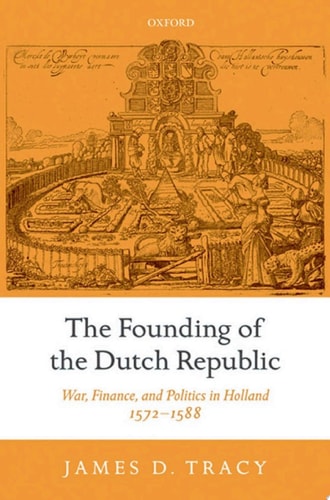
The Founding of the Dutch Republic: War, Finance, and Politics in Holland, 1572-1588
0
0
As an Amazon Associate and affiliate partner, Menrva Books earns from qualifying purchases. Learn more
Author Description
In 1572, towns in the province of Holland, led by William of Orange, rebelled against the government of the Habsburg Netherlands. The story of the Dutch Revolt is usually told in terms of fractious provinces that frustrated Orange's efforts to formulate a coherent programme. In this book James D. Tracy argues that there was a coherent strategy for the war, but that it was set by the towns of Holland. Although the States of Holland were in theory subject to the States General, Holland provided over 60 per cent of the taxes and an even larger share of war loans. Accordingly, funds were directed to securing Holland's borders, and subsequently to extending this protected frontier to neighbouring provinces. Shielded from the war by its cordon sanitaire, Holland experienced an extraordinary economic boom, allowing taxes and loans to keep flowing. The goal - in sight if not achieved by 1588 - was a United Provinces of the north, free and separate from provinces in the southern Netherlands that remained under Spanish rule. With Europe increasingly under the sway of strong hereditary princes, the new Dutch Republic was a beacon of promise for those who still believed that citizens ought to rule themselves.
Menrva's Summary
THE THESIS
This book investigates how the province of Holland established a coherent military and political strategy during the Dutch Revolt against Habsburg rule between 1572 and 1588. James D. Tracy, a scholar of early modern European history, utilizes extensive financial and administrative records to challenge the traditional narrative that the Dutch Revolt lacked central direction. He argues that the towns of Holland, by controlling the majority of tax revenue and war loans, effectively dictated the strategic priorities of the burgeoning republic to secure their own borders and foster economic growth.
THE SCOPE MAP
What You Will Find
- Analysis of the fiscal and military relationship between the States of Holland and the States General.
- Examination of the economic boom in Holland during the conflict.
- Documentation of the strategic shift from defensive border protection to territorial expansion.
Scope Limits
- The study focuses primarily on the province of Holland rather than providing an exhaustive account of all seventeen provinces.
- The narrative concludes in 1588 and does not cover the later stages of the Eighty Years' War.
THE AUTHORITY PERSPECTIVE
Historians recognize this work as a significant contribution to the understanding of early modern state formation and the intersection of finance and warfare. Scholars frequently cite Tracy's analysis for its rigorous use of archival data to explain the economic underpinnings of the Dutch Republic's survival.
Page Count:
320
Publication Date:
2008-01-01
Publisher:
OUP Oxford
ISBN-10:
0191607282
ISBN-13:
9780191607288
History
European History
Military History
Dutch History
Political History
Politics & Government
Economic History
Netherlands history
Community Tags
Similar Books