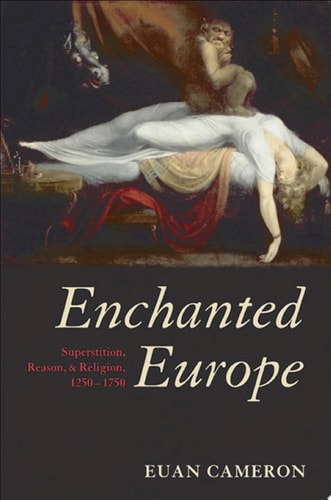
Enchanted Europe: Superstition, Reason, and Religion 1250-1750
0
0
As an Amazon Associate and affiliate partner, Menrva Books earns from qualifying purchases. Learn more
Author Description
Since the dawn of history people have used charms and spells to try to control their environment, and forms of divination to try to foresee the otherwise unpredictable chances of life. Many of these techniques were called 'superstitious' by educated elites. For centuries religious believers used 'superstition' as a term of abuse to denounce another religion that they thought inferior, or to criticize their fellow-believers for practising their faith 'wrongly'. From the Middle Ages to the Enlightenment, scholars argued over what 'superstition' was, how to identify it, and how to persuade people to avoid it. Learned believers in demons and witchcraft, in their treatises and sermons, tried to make 'rational' sense of popular superstitions by blaming them on the deceptive tricks of seductive demons. Every major movement in Christian thought, from rival schools of medieval theology through to the Renaissance, the Reformation, and the Enlightenment, added new twists to the debates over superstition. Protestants saw Catholics as superstitious, and vice versa. Enlightened philosophers mocked traditional cults as superstitions. Eventually, the learned lost their worry about popular belief, and turned instead to chronicling and preserving 'superstitious' customs as folklore and ethnic heritage. Enchanted Europe is the first comprehensive, integrated account of western Europe's long, complex dialogue with its own folklore and popular beliefs. Drawing on many little-known and rarely used texts, Euan Cameron constructs a compelling narrative of the rise, diversification, and decline of popular 'superstition' in the European mind.
Menrva's Summary
THE THESIS
This work investigates the evolving intellectual and religious definitions of 'superstition' in Western Europe between 1250 and 1750. Euan Cameron, a historian specializing in the Reformation and intellectual history, examines how theologians, philosophers, and elites categorized popular beliefs and practices. He argues that the shifting boundaries of what was considered superstitious reflect broader changes in Christian thought, the impact of the Reformation, and the eventual transition toward the Enlightenment's secular perspective.
THE SCOPE MAP
What You Will Find
- Analysis of theological treatises, sermons, and philosophical texts from the late Middle Ages through the Enlightenment.
- Examination of the shifting definitions of superstition used by Catholics and Protestants against one another.
- Documentation of the transition from viewing popular belief as a demonic threat to viewing it as folklore and heritage.
Scope Limits
- The text focuses primarily on the intellectual history of elite discourse rather than a sociological study of the actual practices of the common people.
- It does not provide an exhaustive catalog of every regional folk custom, but rather analyzes the learned reaction to them.
THE AUTHORITY PERSPECTIVE
Scholars and historians recognize this work as a comprehensive synthesis of the intellectual debates surrounding popular belief in early modern Europe. Readers frequently note the academic density of the prose, which provides a rigorous framework for understanding how elite definitions of superstition shaped European cultural identity.
Page Count:
488
Publication Date:
2010-01-01
Publisher:
OUP Oxford
ISBN-10:
019161372X
ISBN-13:
9780191613722
History
Religion
Cultural History
Intellectual History
Folklore
European History
Community Tags
Similar Books