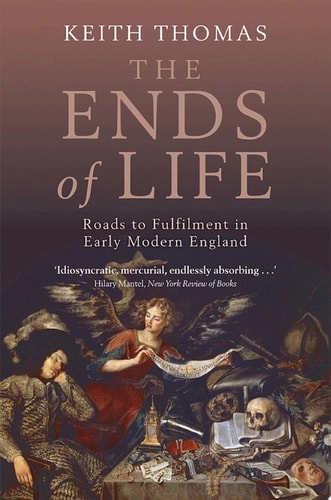
The Ends of Life: Roads to Fulfilment in Early Modern England
0
0
As an Amazon Associate and affiliate partner, Menrva Books earns from qualifying purchases. Learn more
Author Description
How should we live? That question was no less urgent for English men and women who lived between the early sixteenth and late eighteenth centuries than for this book's readers. Keith Thomas's masterly exploration of the ways in which people sought to lead fulfilling lives in those centuries between the beginning of the Reformation and the heyday of the Enlightenment illuminates the central values of the period, while casting incidental light on some of the perennial problems of human existence. Consideration of the origins of the modern ideal of human fulfilment and of obstacles to its realization in the early modern period frames an investigation that ranges from work, wealth, and possessions to the pleasures of friendship, family, and sociability. The cult of military prowess, the pursuit of honour and reputation, the nature of religious belief and scepticism, and the desire to be posthumously remembered are all drawn into the discussion, and the views and practices of ordinary people are measured against the opinions of the leading philosophers and theologians of the time. The Ends of Life offers a fresh approach to the history of early modern England, by one of the foremost historians of our time. It also provides modern readers with much food for thought on the problem of how we should live and what goals in life we should pursue.
Menrva's Summary
THE THESIS
This book investigates the fundamental question of how individuals in early modern England defined and pursued a fulfilling life. Sir Keith Thomas, a distinguished historian, utilizes a vast array of primary sources—ranging from personal diaries and letters to theological treatises and philosophical texts—to reconstruct the values and aspirations of people living between the Reformation and the Enlightenment. He argues that the pursuit of fulfillment was shaped by a complex interplay of social, religious, and economic factors that continue to influence modern conceptions of a meaningful existence.
THE SCOPE MAP
What You Will Find
- Analysis of societal values including work, wealth, honor, and reputation.
- Examination of the roles of friendship, family, and sociability in personal satisfaction.
- Comparison between the beliefs of ordinary citizens and the intellectual output of contemporary philosophers and theologians.
Scope Limits
- The analysis is geographically restricted to England.
- The study focuses on the period between the early sixteenth and late eighteenth centuries.
THE AUTHORITY PERSPECTIVE
Experts recognize this work as a significant contribution to social and intellectual history, noting the author's ability to synthesize diverse historical evidence into a coherent narrative. Readers frequently highlight the academic density of the prose, which provides a rigorous examination of early modern life while remaining accessible to those interested in the history of human values.
Page Count:
411
Publication Date:
2010-01-01
Publisher:
OUP Oxford
ISBN-10:
0191623466
ISBN-13:
9780191623462
History
Philosophy
Social History
Early Modern
European History
Cultural History
Intellectual History
Community Tags
Similar Books