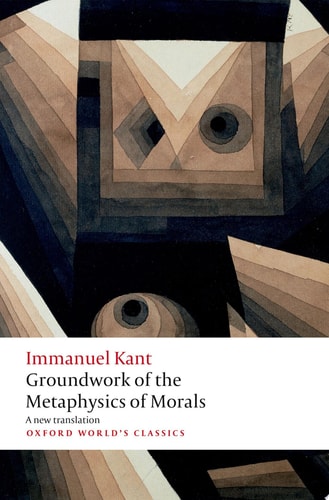
Kant's Groundwork for the Metaphysics of Morals
0
0
As an Amazon Associate and affiliate partner, Menrva Books earns from qualifying purchases. Learn more
Author Description
Henry E. Allison Presents A Comprehensive Commentary On Kant's Groundwork For The Metaphysics Of Morals (1785). It Differs From Most Recent Commentaries In Paying Special Attention To The Structure Of The Work, The Historical Context In Which It Was Written, And The Views To Which Kant Was Responding. Allison Argues That, Despite Its Relative Brevity, The Groundwork Is The Single Most Important Work In Modern Moral Philosophy And That Its Significance Lies Mainly In Two Closely Related Factors. The First Is That It Is Here That Kant First Articulates His Revolutionary Principle Of The Autonomy Of The Will, That Is, The Paradoxical Thesis That Moral Requirements (duties) Are Self-imposed And That It Is Only In Virtue Of This That They Can Be Unconditionally Binding. The Second Is That For Kant All Other Moral Theories Are United By The Assumption That The Ground Of Moral Requirements Must Be Located In Some Object Of The Will (the Good) Rather Than The Will Itself, Which Kant Terms Heteronomy. Accordingly, What From The Standpoint Of Previous Moral Theories Was Seen As A Fundamental Conflict Between Various Views Of The Good Is Reconceived By Kant As A Family Quarrel Between Various Forms Of Heteronomy, None Of Which Are Capable Of Accounting For The Unconditionally Binding Nature Of Morality. Allison Goes On To Argue That Kant Expresses This Incapacity By Claiming That The Various Forms Of Heteronomy Unavoidably Reduce The Categorical To A Merely Hypothetical Imperative.
Menrva's Summary
THE THESIS
This work investigates the foundational structure and philosophical significance of Immanuel Kant's 1785 treatise, the Groundwork for the Metaphysics of Morals. Henry E. Allison, a prominent scholar of Kantian philosophy, utilizes historical context and rigorous textual analysis to argue that the Groundwork remains the most significant text in modern moral philosophy. He posits that the work's importance stems from Kant's articulation of the autonomy of the will and his critique of heteronomous moral theories, which fail to account for the unconditional nature of moral duty.
THE SCOPE MAP
What You Will Find
- A detailed structural analysis of the Groundwork for the Metaphysics of Morals.
- An examination of the historical intellectual climate surrounding Kant's writing.
- A comparative study of Kant's autonomy of the will versus traditional heteronomous moral theories.
- An explanation of the distinction between categorical and hypothetical imperatives.
Scope Limits
- The text focuses primarily on the Groundwork rather than Kant's later ethical writings.
- It does not provide a general introduction to Kantian philosophy for those without prior exposure to his terminology.
THE AUTHORITY PERSPECTIVE
Scholars and students of philosophy frequently cite this commentary for its meticulous attention to the logical architecture of Kant's arguments. It is widely regarded as a rigorous, high-level resource for those seeking to understand the nuances of Kantian ethics.
Page Count:
384
Publication Date:
2011-01-01
Publisher:
Oup Oxford
ISBN-10:
0191620521
ISBN-13:
9780191620522
Philosophy
Ethics
Kant
Moral Philosophy
Academic Commentary
Community Tags
Similar Books