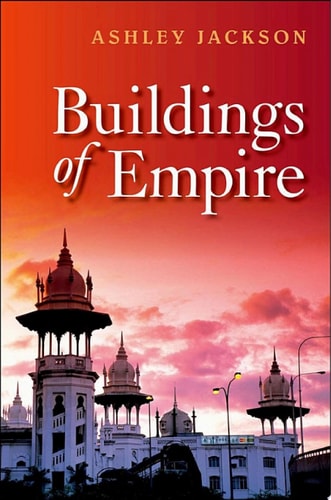
Buildings of Empire
0
0
As an Amazon Associate and affiliate partner, Menrva Books earns from qualifying purchases. Learn more
Author Description
Buildings of Empire takes the reader on an exciting journey through thirteen territories of the British Empire. From Dublin Castle to the glass and steel of Sir Norman Foster's Hong Kong and Shanghai Bank skyscraper, these buildings capture the essence of the imperial experience, painting an intimate portrait of the biggest empire the world has ever seen: the people who made it and the people who resisted it, as well as the legacy of the imperial project throughout the world. Ashley Jackson visits classic examples of the buildings that the British governed from, the forts they (often brutally) imposed their rule from, the railway stations they travelled from, the banks they traded from, the educational establishments they spread their values from, as well as the grand colonial hotels they stayed in, the sporting clubs and botanical gardens where they took their leisure, and the monumental exhibition spaces in which they celebrated the achievements of settlement and imperial endeavour. The history of these buildings does not end with the empire that built them. Their story in the aftermath of empire highlights the continuing legacy of many of the structures and institutions the British left behind, as well as the sometimes unexpected role that these former symbols of alien rule have played in the establishment of new national identities in the years since independence.
Menrva's Summary
THE THESIS
This book investigates how the physical structures of the British Empire served as both instruments of colonial control and enduring symbols of national identity in the post-colonial era. Ashley Jackson, a professor of imperial and military history, utilizes a comparative case study approach across thirteen global territories. By examining diverse architectural forms—from administrative castles to commercial skyscrapers—the author argues that these buildings provide a tangible record of the imperial project's reach, its methods of governance, and its complex legacy in the modern world.
THE SCOPE MAP
What You Will Find
- Analysis of thirteen distinct imperial territories including Dublin, Hong Kong, and various colonial outposts.
- Examination of building typologies such as forts, railway stations, banks, and botanical gardens.
- Discussion of the transition of colonial structures into symbols of new national identities post-independence.
Scope Limits
- The text does not provide an exhaustive architectural survey of every British colonial territory.
- It does not focus on the technical engineering specifications of the buildings, prioritizing their socio-political function instead.
THE AUTHORITY PERSPECTIVE
Historians and architectural critics frequently note the book's success in bridging the gap between political history and the built environment. Experts highlight this as a useful resource for understanding the physical manifestation of colonial power and its long-term cultural impact.
Page Count:
335
Publication Date:
2013-01-01
Publisher:
OUP Oxford
ISBN-10:
0191625183
ISBN-13:
9780191625183
Architecture
History
Colonialism
British Empire
European History
Great Britain
Cultural History
Community Tags
Other Editions(4)


Similar Books


Reader Comments
Share Your Thoughts
No comments yet. Be the first to share your thoughts!