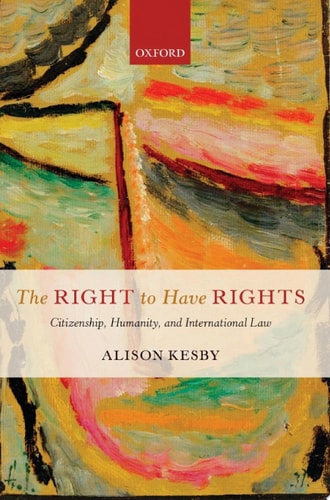
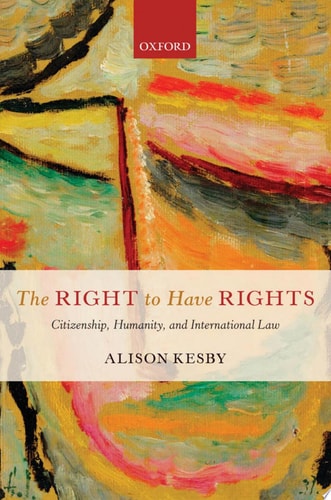
The Right to Have Rights: Citizenship, Humanity, and International Law
0
0
As an Amazon Associate and affiliate partner, Menrva Books earns from qualifying purchases. Learn more
Author Description
Writing in the immediate aftermath of the Second World War, the political theorist Hannah Arendt argued that the plight of stateless people in the inter-war period pointed to the existence of a 'right to have rights'. The right to have rights was the right to citizenship-to membership of a political community. Since then, and especially in recent years, theorists have continued to grapple with the meaning of the right to have rights. In the context of enduring statelessness, mass migration, people flows, and the contested nature of democratic politics, the question of the right to have rights remains of pressing concern for writers and advocates across the disciplines. This book provides the first in-depth examination of the right to have rights in the context of the international protection of human rights. It explores two overarching questions. First, how do different and competing conceptions of the right to have rights shed light on right bearing in the contemporary context, and in particular on concepts and relationships central to the protection of human rights in public international law? Secondly, given these competing conceptions, how is the right to have rights to be understood in the context of public international law? In the course of the analysis, the author examines the significance and limits of nationality, citizenship, humanity and politics for right bearing, and argues that their complex interrelation points to how the right to have rights might be rearticulated for the purposes of international legal thought and practice.
Menrva's Summary
THE THESIS
This book investigates the conceptual and practical implications of the 'right to have rights' as articulated by Hannah Arendt within the framework of contemporary international human rights law. Alison Kesby, a scholar in international law and political theory, synthesizes historical political thought with modern legal challenges. She argues that the complex interplay between nationality, citizenship, and humanity necessitates a rearticulation of how rights are protected and exercised in the international legal order.
THE SCOPE MAP
What You Will Find
- An analysis of Hannah Arendt's political theory regarding statelessness and political membership.
- A critical examination of the relationship between public international law and individual right-bearing.
- A study of the tensions between national citizenship and universal human rights protections.
Scope Limits
- The text does not provide a comprehensive history of all international human rights treaties.
- It does not offer a practical policy manual for immigration or refugee status adjudication.
THE AUTHORITY PERSPECTIVE
Scholars and legal theorists frequently cite this work as a rigorous bridge between political philosophy and international jurisprudence. Experts highlight the text's utility for those seeking to understand the structural limitations of current human rights protections in the face of global statelessness.
Page Count:
176
Publication Date:
2012-01-01
Publisher:
OUP Oxford
ISBN-10:
0191627798
ISBN-13:
9780191627798
Human rights
Professional Career & Trade
Political Theory
Citizenship
Law Philosophy
International Law
Citizenship Studies
Community Tags
Other Editions(2)
Similar Books