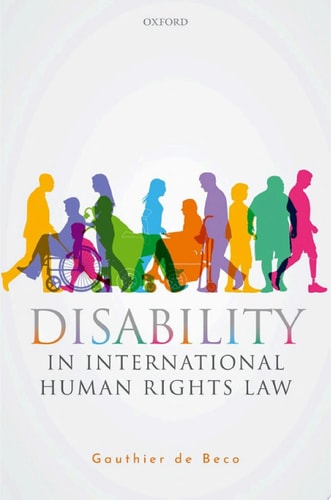
Disability in International Human Rights Law
0
0
As an Amazon Associate and affiliate partner, Menrva Books earns from qualifying purchases. Learn more
Author Description
This book examines what international human rights law has gained from the new elements in the UN Convention on the Rights of Persons with Disabilities (CRPD). It explores how the CRPD is intricately bound up with other international instruments by studying the relationship between the Convention rights and those protected by other human rights treaties, as well as the overall objectives of the UN. Using a social model lens on disability, the book shows how the Convention sheds new light on the very notion of human rights. The book provides a theoretical framework which explicitly integrates disability into international human rights law. It explains how the CRPD challenges the legal subject by drawing attention to distinct forms of embodiment, before introducing the idea of the 'dis-abled subject', which stems from a recognition that all individuals encounter disability-related issues during their lives. The book also shows how to apply this theoretical framework to several rights and highlights the consequences for the implementation of human rights treaties as a whole. It builds upon the literature of disability studies and legal and political theory, as well as drawing upon the recommendations of treaty bodies and reports of UN agencies and disabled people's organisations. This book thereby provides an agenda-setting analysis for all human rights experts, by showing the benefits of placing disabled people at the heart of international human rights law.
Menrva's Summary
THE THESIS
This book investigates how the UN Convention on the Rights of Persons with Disabilities (CRPD) transforms the existing framework of international human rights law. Gauthier de Beco utilizes a social model of disability to analyze the relationship between the CRPD and broader international human rights treaties. By introducing the concept of the 'dis-abled subject,' the author argues that disability is a universal human experience that necessitates a fundamental shift in how legal subjects are defined and protected within international systems.
THE SCOPE MAP
What You Will Find
- Analysis of the UN Convention on the Rights of Persons with Disabilities (CRPD)
- Theoretical framework integrating disability into international legal doctrine
- Examination of the 'dis-abled subject' in legal theory
- Synthesis of recommendations from UN treaty bodies and disabled people's organizations
Scope Limits
- Does not provide a comprehensive history of all disability legislation prior to the CRPD
- Focuses primarily on international legal instruments rather than domestic implementation strategies
THE AUTHORITY PERSPECTIVE
Experts recognize this work as a significant contribution to the intersection of disability studies and international human rights law. Readers frequently note the academic density of the prose and the rigorous application of legal and political theory to the CRPD.
Page Count:
233
Publication Date:
2021-01-01
Publisher:
OUP Oxford
ISBN-10:
0192557939
ISBN-13:
9780192557933
Human rights
International Law
Professional Career & Trade
Political Theory
Law
Sociology
Community Tags
Similar Books