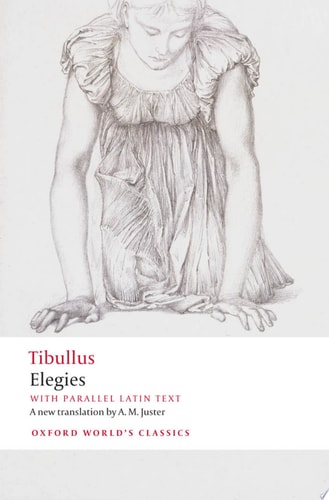
Elegies: With Parallel Latin Text
0
0
As an Amazon Associate and affiliate partner, Menrva Books earns from qualifying purchases. Learn more
Author Description
Delia, when flames engulf my bier you'll weep for me, and then you'll mix your kisses with sad tears.' Tibullus (?55-18 BC) was one of a group of poets known as the Latin elegists, whose number included Ovid and Propertius. Living in the age of Augustus, his poems reflect Augustan ideals, but they are above all notable for their emphasis on the personal, and for their subject-matter, love. Tibullus' elegies are addressed to two different mistresses, Delia and Nemesis, and a boy, Marathus. His pious and idealistic love for Delia is replaced by a more tortured affair with the cruel Nemesis, and the poet's elegies to Marathus give a broader perspective to his treatment of the subject. Anguish and betrayal characterize Tibullus' depiction of love's changing fortunes, in poetry that is passionate, vivid, and sometimes haunting. In this parallel text edition, A. M. Juster's eloquent translations are accompanied by an introduction and notes from Robert Maltby which discuss Tibullus' work in its literary and historical context. Together they demonstrate the achievements of this fine Roman poet. ABOUT THE SERIES: For over 100 years Oxford World's Classics has made available the widest range of literature from around the globe. Each affordable volume reflects Oxford's commitment to scholarship, providing the most accurate text plus a wealth of other valuable features, including expert introductions by leading authorities, helpful notes to clarify the text, up-to-date bibliographies for further study, and much more.
Menrva's Summary
THE PULSE
The poet Tibullus navigates the volatile landscape of Roman love, documenting the transition from idealistic devotion to the bitter reality of betrayal.
Through a series of elegies, the speaker addresses his shifting affections for two mistresses, Delia and Nemesis, alongside his interest in a youth named Marathus. The narrative framework relies on the conventions of the Latin elegiac tradition, emphasizing personal experience over public duty. The speaker struggles against the constraints of his own emotional volatility and the societal expectations of the Augustan age, which often conflict with his private desires. The poems function as a direct, intimate address, capturing the immediate sensations of longing, jealousy, and grief.
INSIDE THE PAGES
- Parallel Latin and English text presentation
- Exploration of the elegiac genre conventions
- Focus on personal, subjective emotional states
- Depiction of shifting romantic loyalties
- Contextualization within the Augustan era
- Scholarly introduction by Robert Maltby
- Detailed explanatory notes for historical context
- Translation by A. M. Juster
THE COLLECTIVE ECHO
Discussion often centers on the contrast between the poet's pious devotion to Delia and the subsequent, more tortured affair with Nemesis. Readers frequently highlight the vivid, haunting quality of the imagery used to describe the changing fortunes of love. Critics observe that while the poems reflect the broader ideals of the Augustan period, they remain distinct for their intense focus on individual vulnerability. The inclusion of the parallel Latin text is frequently praised for providing scholars and enthusiasts with a deeper understanding of the original linguistic nuances. The work is widely regarded as a significant contribution to the study of Roman elegiac poetry.
Page Count:
129
Publication Date:
2012-01-01
Publisher:
OUP Oxford
ISBN-10:
0191622249
ISBN-13:
9780191622243
Poetry
English & College Success
Elegiac Poetry
Roman
Ancient History
English
Classical
Community Tags
Similar Books