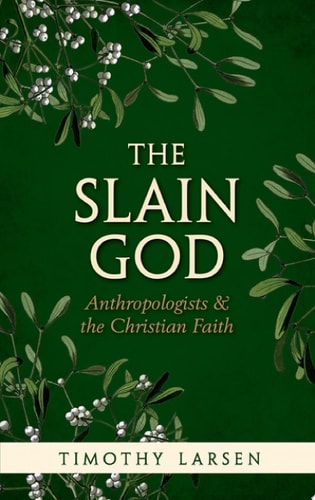
The Slain God
0
0
As an Amazon Associate and affiliate partner, Menrva Books earns from qualifying purchases. Learn more
Author Description
Throughout Its Entire History, The Discipline Of Anthropology Has Been Perceived As Undermining, Or Even Discrediting, Christian Faith. Many Of Its Most Prominent Theorists Have Been Agnostics Who Assumed That Ethnographic Findings And Theories Had Exposed Religious Beliefs To Be Untenable. E. B. Tylor, The Founder Of The Discipline In Britain, Lost His Faith Through Studying Anthropology. James Frazer Saw The Material That He Presented In His Highly Influential Work, The Golden Bough, As Demonstrating That Christian Thought Was Based On The Erroneous Thought Patterns Of 'savages.' On The Other Hand, Some Of The Most Eminent Anthropologists Have Been Christians, Including E. E. Evans-pritchard, Mary Douglas, Victor Turner, And Edith Turner. Moreover, They Openly Presented Articulate Reasons For How Their Religious Convictions Cohered With Their Professional Work. Despite Being A Major Site Of Friction Between Faith And Modern Thought, The Relationship Between Anthropology And Christianity Has Never Before Been The Subject Of A Book-length Study. In This Groundbreaking Work, Timothy Larsen Examines The Point Where Doubt And Faith Collide With Anthropological Theory And Evidence.
Menrva's Summary
THE THESIS
This work investigates the historical and intellectual tension between the discipline of anthropology and Christian faith. Timothy Larsen, a professor of history, utilizes biographical analysis and historical inquiry to examine how prominent anthropologists have navigated the perceived conflict between ethnographic research and religious belief. The book argues that while the field has often been associated with secularization, a significant lineage of Christian scholars has successfully integrated their faith with their professional contributions.
THE SCOPE MAP
What You Will Find
- Historical analysis of foundational figures such as E. B. Tylor and James Frazer.
- Profiles of Christian anthropologists including E. E. Evans-Pritchard, Mary Douglas, and Victor Turner.
- Examination of the intersection between ethnographic theory and theological conviction.
Scope Limits
- The text focuses primarily on the British tradition of anthropology rather than global ethnographic history.
- It does not provide a comprehensive survey of all religious traditions, focusing specifically on the relationship with Christianity.
THE AUTHORITY PERSPECTIVE
Scholars recognize this text as a significant contribution to the history of social sciences, filling a notable gap in the literature regarding the religious affiliations of key theorists. Readers frequently note the clarity of the prose and the depth of the biographical research provided by the author.
Page Count:
272
Publication Date:
2014-01-01
Publisher:
Oup Oxford
ISBN-10:
0191632058
ISBN-13:
9780191632051
Religion
Sociology of Religion
Christianity
Anthropology
Science History
Community Tags
Similar Books