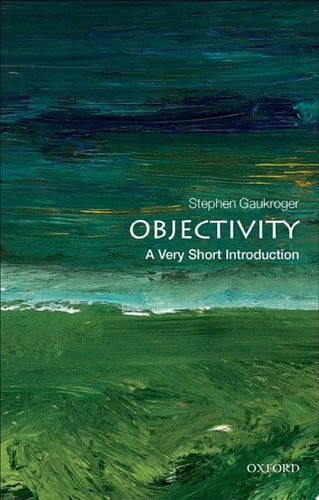
Objectivity: A Very Short Introduction
0
0
As an Amazon Associate and affiliate partner, Menrva Books earns from qualifying purchases. Learn more
Author Description
- Is objectivity possible? - Can there be objectivity in matters of morals, or tastes? - What would a truly objective account of the world be like? - Is everything subjective, or relative? - Are moral judgments objective or culturally relative? Objectivity is both an essential and elusive philosophical concept. An account is generally considered to be objective if it attempts to capture the nature of the object studied without judgement of a conscious entity or subject. Objectivity stands in contrast to subjectivity: an objective account is impartial, one which could ideally be accepted by any subject, because it does not draw on any assumptions, prejudices, or values of particular subjects. Stephen Gaukroger shows that it is far from clear that we can resolve moral or aesthetic disputes in this way and it has often been argued that such an approach is not always appropriate for disciplines that deal with human, rather than natural, phenomena. Moreover, even in those cases where we seek to be objective, it may be difficult to judge what a truly objective account would look like, and whether it is achievable. This Very Short Introduction demonstrates that there are a number of common misunderstandings about what objectivity is, and explores the theoretical and practical problems of objectivity by assessing the basic questions raised by it. As well as considering the core philosophical issues, Gaukroger also deals with the way in which particular understandings of objectivity impinge on social research, science, and art. ABOUT THE SERIES: The Very Short Introductions series from Oxford University Press contains hundreds of titles in almost every subject area. These pocket-sized books are the perfect way to get ahead in a new subject quickly. Our expert authors combine facts, analysis, perspective, new ideas, and enthusiasm to make interesting and challenging topics highly readable.
Menrva's Summary
THE THESIS
This book investigates the philosophical viability and practical application of objectivity as a standard for knowledge and judgment. Stephen Gaukroger, a professor of history of philosophy and science, utilizes historical and analytical frameworks to examine whether an impartial account of the world is attainable. He argues that the definition of objectivity shifts significantly depending on whether the subject matter pertains to natural phenomena or human-centered disciplines like ethics and aesthetics.
THE SCOPE MAP
What You Will Find
- Historical evolution of the concept of objectivity
- Analysis of the distinction between subjective and objective accounts
- Examination of objectivity within science, social research, and art
- Assessment of moral and aesthetic relativism
Scope Limits
- Does not provide a comprehensive history of all philosophical thought
- Does not offer a definitive resolution to the debate over moral realism
THE AUTHORITY PERSPECTIVE
Readers frequently note the concise and accessible nature of this text, which serves as a helpful primer for students and general readers interested in epistemology. Experts highlight this as a balanced introduction that successfully navigates complex theoretical problems without becoming overly bogged down in technical jargon.
Page Count:
129
Publication Date:
2012-01-01
Publisher:
OUP Oxford
ISBN-10:
0191642096
ISBN-13:
9780191642098
Non-Fiction
Philosophy
Science
Social Science
Epistemology
Community Tags
Other Editions(2)
Similar Books


Reader Comments
Share Your Thoughts
No comments yet. Be the first to share your thoughts!