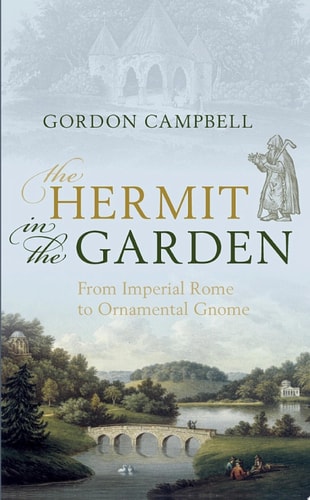
The Hermit in the Garden: From Imperial Rome to Ornamental Gnome
0
0
As an Amazon Associate and affiliate partner, Menrva Books earns from qualifying purchases. Learn more
Author Description
Tracing its distant origins to the villa of the Roman emperor Hadrian in the second century AD, the eccentric phenomenon of the ornamental hermit enjoyed its heyday in the England of the eighteenth century. It was at this time that it became highly fashionable for owners of country estates to commission architectural follies for their landscape gardens. These follies often included hermitages, many of which still survive, often in a ruined state. Landowners peopled their hermitages either with imaginary hermits or with real hermits - in some cases the landowner even became his own hermit. Those who took employment as garden hermits were typically required to refrain from cutting their hair or washing, and some were dressed as druids. Unlike the hermits of the Middle Ages, these were wholly secular hermits, products of the eighteenth century fondness for 'pleasing melancholy'. Although the fashion for them had fizzled out by the end of the eighteenth century, they had left their indelible mark on both the literature as well as the gardens of the period. And, as Gordon Campbell shows, they live on in the art, literature, and drama of our own day - as well as in the figure of the modern-day garden gnome. This engaging and generously illustrated book takes the reader on a journey that is at once illuminating and whimsical, both through the history of the ornamental hermit and also around the sites of many of the surviving hermitages themselves, which remain scattered throughout England, Scotland, and Ireland. And for the real enthusiast, there is even a comprehensive checklist, enabling avid hermitage-hunters to locate their prey.
Menrva's Summary
THE THESIS
This book investigates the historical origins and cultural evolution of the ornamental hermit, a phenomenon that transitioned from Roman imperial architecture to the eighteenth-century English garden and eventually the modern garden gnome. Gordon Lindsay Campbell, a scholar of cultural history, utilizes architectural records, literary references, and site surveys to document the rise and fall of the garden hermit. He argues that these figures were not merely eccentric curiosities but reflections of the period's specific aesthetic interest in 'pleasing melancholy' and secular solitude.
THE SCOPE MAP
What You Will Find
- Historical analysis of Roman villa architecture and its influence on later garden design.
- Documentation of eighteenth-century English estate follies and hermitage structures.
- Cultural examination of the transition from human garden hermits to the mass-produced garden gnome.
- A comprehensive checklist of surviving hermitage sites across England, Scotland, and Ireland.
Scope Limits
- The study focuses primarily on the British Isles and does not provide an exhaustive global history of garden architecture.
- The text prioritizes the cultural and social history of the phenomenon over technical architectural restoration guidelines.
THE AUTHORITY PERSPECTIVE
Scholars and garden historians recognize this work as a definitive study on a niche but significant aspect of eighteenth-century landscape design. Readers frequently note the accessible, engaging prose style that balances academic rigor with the inherent whimsy of the subject matter.
Page Count:
282
Publication Date:
2013-01-01
Publisher:
OUP Oxford
ISBN-10:
0191644498
ISBN-13:
9780191644498
Architecture
History
Gardens
European History
Hermits
Garden History
Hermitages
British History
Community Tags
Similar Books