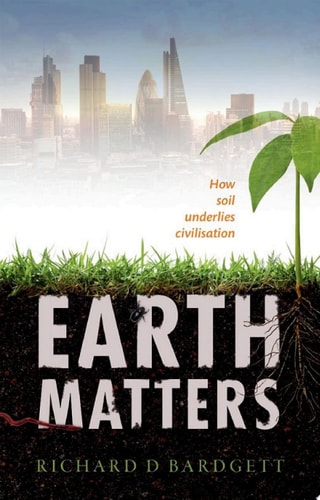
Earth Matters: How Soil Underlies Civilization
0
0
As an Amazon Associate and affiliate partner, Menrva Books earns from qualifying purchases. Learn more
Author Description
For much of history, soil has played a major, and often central, role in the lives of humans. Entire societies have risen, and collapsed, through the management or mismanagement of soil; farmers and gardeners worldwide nurture their soil to provide their plants with water, nutrients, and protection from pests and diseases; major battles have been aborted or stalled by the condition of soil; murder trials have been solved with evidence from the soil; and, for most of us, our ultimate fate is the soil. In this book, Richard Bardgett discusses soil and the many, and sometimes surprising, ways that humanity has depended on it throughout history, and still does today. Analysing the role soil plays in our own lives, despite increasing urbanization, and in the biogeochemical cycles that allow the planet to function effectively, Bardgett considers how superior soil management could combat global issues such as climate change, food shortages, and the extinction of species. Looking to the future, Bardgett argues that it is vital for the future of humanity for governments worldwide to halt soil degradation, and to put in place policies for the future sustainable management of soils.
Menrva's Summary
THE THESIS
This book investigates the fundamental role of soil in the development, maintenance, and potential collapse of human civilizations throughout history. Richard D. Bardgett, a professor of ecology, utilizes his expertise in soil science to synthesize historical data, biogeochemical cycles, and modern agricultural challenges. He argues that the health of human society is inextricably linked to the sustainable management of soil resources and that current degradation poses a significant threat to global stability.
THE SCOPE MAP
What You Will Find
- Historical analysis of soil management in the rise and fall of past societies
- Examination of soil's role in forensic science, military history, and agriculture
- Discussion of soil's function in global biogeochemical cycles
- Policy recommendations for mitigating climate change and food insecurity
Scope Limits
- The text does not provide a technical manual for individual gardening or small-scale soil remediation
- It does not focus on the geological formation of soil over deep time, prioritizing human interaction instead
THE AUTHORITY PERSPECTIVE
Experts recognize this work as an accessible and comprehensive synthesis of soil ecology and human history. Readers frequently note that the prose effectively bridges the gap between complex scientific processes and their practical implications for global policy.
Page Count:
215
Publication Date:
2016-01-01
Publisher:
OUP Oxford
ISBN-10:
0191645648
ISBN-13:
9780191645648
History
Science
Earth Sciences
Sustainability
Earth Science
Ecology
Agriculture
Community Tags
Similar Books