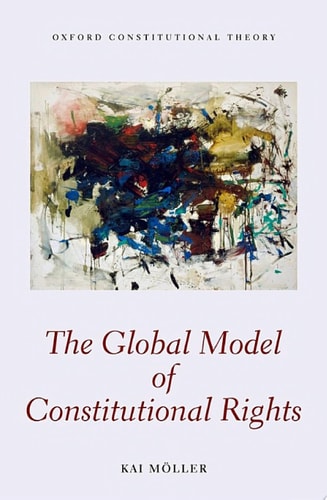
The Global Model of Constitutional Rights
0
0
As an Amazon Associate and affiliate partner, Menrva Books earns from qualifying purchases. Learn more
Author Description
Since the end of the Second World War and the subsequent success of constitutional judicial review, one particular model of constitutional rights has had remarkable success, first in Europe and now globally. This global model of constitutional rights is characterized by an extremely broad approach to the scope of rights (sometimes referred to as 'rights inflation'), the acceptance of horizontal effect of rights, positive obligations, and increasingly also socio-economic rights, and the use of the doctrines of balancing and proportionality to determine the permissible limitations of rights. Drawing on analyses of a broad range of cases from the UK, the European Court of Human Rights, Germany, Canada, the US, and South Africa, this book provides the first substantive moral, reconstructive theory of the global model. It shows that it is based on a coherent conception of constitutional rights which connects to attractive accounts of judicial review, democracy and the separation of powers. The first part of the book develops a theory of the scope of rights under the global model. It defends the idea of a general right to personal autonomy: a right to everything which, according to the agent's self-conception, is in his or her interest. The function of this right is to acknowledge that every act by a public authority which places a burden on a person's autonomy requires justification. The second part of the book proposes a theory of the structure of this justification which offers original and useful accounts of the important doctrines of balancing and proportionality.
Menrva's Summary
THE THESIS
This book investigates the moral and structural foundations of the global model of constitutional rights that has emerged in judicial systems worldwide since the Second World War. Kai Möller, a scholar of constitutional theory, utilizes a comparative analysis of legal frameworks from the UK, Germany, Canada, the US, South Africa, and the European Court of Human Rights to construct a normative theory. He argues that the global model is not merely a collection of disparate practices but is rooted in a coherent conception of personal autonomy and justified state action.
THE SCOPE MAP
What You Will Find
- A theoretical framework for the scope of rights based on personal autonomy.
- A detailed analysis of the doctrines of balancing and proportionality in legal justification.
- Comparative case studies from multiple international jurisdictions.
Scope Limits
- The text does not provide a comprehensive history of every national constitutional court.
- It does not offer a practical litigation manual for practicing attorneys.
THE AUTHORITY PERSPECTIVE
Legal scholars frequently identify this work as a significant contribution to the understanding of contemporary constitutional theory and the mechanics of judicial review. Experts highlight the book's ability to synthesize complex doctrinal practices into a unified moral framework for academic and professional study.
Page Count:
237
Publication Date:
2012-01-01
Publisher:
OUP Oxford
ISBN-10:
0191642185
ISBN-13:
9780191642180
Jurisprudence
Political Theory
Human rights
Law
Constitutional Law
Professional Career & Trade
Community Tags
Other Editions(4)

Similar Books




Reader Comments
Share Your Thoughts
No comments yet. Be the first to share your thoughts!