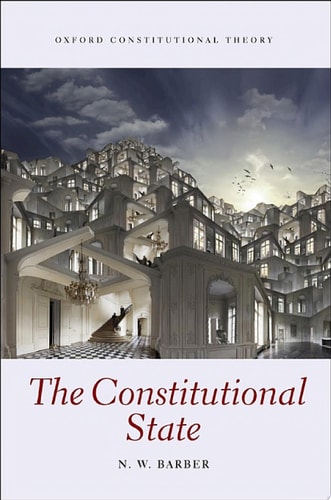
The Constitutional State
0
0
As an Amazon Associate and affiliate partner, Menrva Books earns from qualifying purchases. Learn more
Author Description
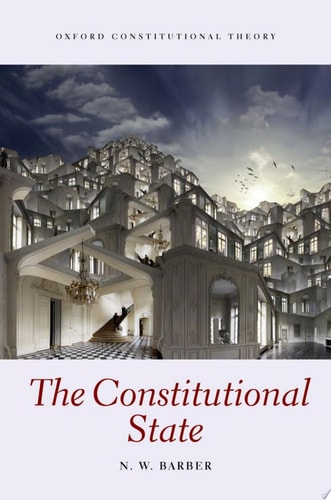
The Constitutional State provides an original analytical account of the state and its associated constitutional phenomena. It presents the state as a form of social group, consisting of people, territory and institutions bound together by rules. The institutions of the state make a distinctive and characteristic claim over the people of the state, who, in turn, have a distinctive and characteristic relationship with these institutions. This account reveals the importance of at least two forms of pluralism - legal and constitutional. It also casts light on some of the more difficult questions faced by writers on constitutions - such as the possibility of states undertaking actions and forming intentions, the moral significance of these actions for the people of the state, and the capacity of the state to carry responsibility for acts between generations.
Menrva's Summary
THE THESIS
This work investigates the fundamental nature of the state and the constitutional mechanisms that define its existence and authority. N. W. Barber, a scholar of constitutional law, constructs an analytical framework that treats the state as a social group defined by the interplay between territory, institutions, and the populace. By examining the normative claims states exert over their citizens, the author provides a rigorous account of how constitutional rules facilitate state action, intention, and intergenerational responsibility.
THE SCOPE MAP
What You Will Find
- An analytical definition of the state as a social group
- A detailed examination of legal and constitutional pluralism
- Theoretical exploration of state agency and moral responsibility
Scope Limits
- The text does not provide a comparative historical survey of specific national constitutions
- It avoids practical policy prescriptions in favor of abstract conceptual analysis
THE AUTHORITY PERSPECTIVE
Legal scholars and political theorists frequently cite this text for its precise conceptual clarity regarding the nature of statehood. Experts highlight the work as a significant contribution to contemporary constitutional theory, noting its dense and rigorous argumentative style.
Page Count:
216
Publication Date:
2012-01-01
Publisher:
OUP Oxford
ISBN-10:
0191637254
ISBN-13:
9780191637254
Constitutional Law
Law
Constitutions
Law Philosophy
State The
Professional Career & Trade
Political Theory